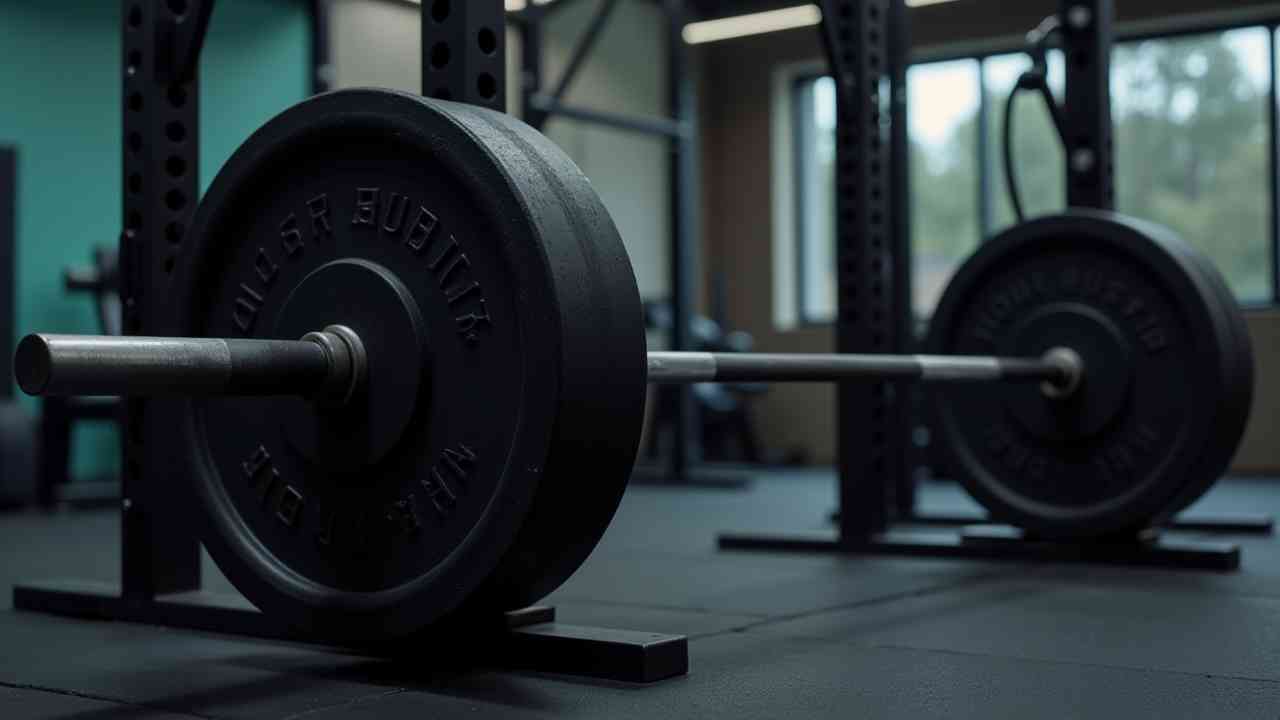
Bar Weights: The Guide 🏋️
What Are "Bar Weights"?
This is a common gym question. "Bar weights" is a simple term. It can mean two different things. 1. The Barbell itself. ("What does the bar weigh?"). ( 2. The Weight Plates... ...that you load onto the bar. ("Hand me those bar weights."). ( A good lifter must understand both. They are a system. They work together. This guide will explain both parts. We will cover the bars. And we will cover the plates. Understanding this is the key to safe, effective lifting. 💡
Part 1: The Bars (The Barbells)
This is the centerpiece of the gym. The barbell. But not all bars are created equal. They have different weights. And different purposes.
The King: The Men's Olympic Bar 👑
This is the standard. This is the one you will almost always use. When someone says "the bar"... ...they mean this one. It is the long, 7-foot bar. You find it in the squat rack. And on the bench press. How much does it weigh? This is the #1 question. The answer is standard. A Men's Olympic Bar weighs:
- 45 POUNDS (lbs)
- 20 KILOGRAMS (kg)
The Women's Olympic Bar 🏋️♀️
This is the other official Olympic bar. It is also a high-quality bar. It is just slightly smaller. IHow much does it weigh? A Women's Olympic Bar weighs:
- 33 POUNDS (lbs)
- 15 KILOGRAMS (kg)
The "Standard" Bar (The 1-Inch Home Bar) 🚫
This is the bar you must know about. So you can avoid it. This is the "cheap" bar. It is sold in "home gym" sets. (At Walmart or Target). ( How much does it weigh? Who knows? It is not standard. It could be 10 lbs. It could be 15 lbs. It is light and hollow. The Key Difference: The "sleeves" (the ends) are 1 INCH thick. Not 2 inches. This is the problem. It can only hold 1-inch "Standard" plates. It cannot hold 2-inch "Olympic" plates. These bars are not safe. They cannot hold much weight. (Maybe 150 lbs, max). (The sleeves do not spin. The collars (spin-locks) are slow. No serious gym uses this. This is "toy" equipment. Avoid it.
Specialty Bars (The Fun Stuff)
Your gym has other, weirdly-shaped bars. These are "specialty bars." They are for special jobs. T
1. The EZ Curl Bar
This is the short bar with the "W" shape. We have a full article on this. It is for your arms. (Biceps and Triceps). ( The "W" bend saves your wrists from pain. It is a "joint-saver." Weight: 15 to 30 lbs. (It is not standard. You must check). (
2. The Trap Bar / Hex Bar
This is the large, hexagonal-shaped bar. You stand inside of it. It has two handles on the sides. I What is it for? Deadlifts! (And Shrugs, and Farmer's Walks). ( It is a safer way to deadlift. The weight is at your sides. Not in front of you. This takes all the stress off your lower back. It is a fantastic, safe tool. Weight: 45 to 70 lbs. (They vary a lot. Ask your gym staff). (
3. The Squat Bar
This is a "pro-level" bar. It is for powerlifters. It looks just like an Olympic bar. But it is different. It is stiffer. It does not "whip" or "bend." It is often thicker. (30-32mm). (This feels more stable on your back. The knurling is also very sharp and "aggressive." It "sticks" to your back.
Part 2: The Weights (The Plates)
This is the second half of "bar weights." These are the plates you load. They are also called "weight plates."
The #1 Rule: The Hole Size (Olympic vs. Standard) 🔑
This is the most important rule. The plates must match the bar. 1. Olympic Plates: These have a 2-INCH (50mm) center hole. These are the plates you see in all real gyms. They fit on the 2-inch Olympic bars. 2. Standard Plates: These have a 1-INCH center hole. T These are the "cheap" home-gym plates. They only fit on the 1-inch "Standard" bars. These two systems are not compatible. You must have one or the other. Pro-Tip: Invest in the Olympic system. It is the global standard. It is safer. It is what the pros use.
Types of Olympic Plates (The "Weights")
You will see 3 main types of Olympic plates. They have different uses.
1. Cast Iron Plates (The "Classic") ⚙️
These are the old-school, classic plates. They are 100% solid cast iron. They are often black or gray. The old ones are very cool. Pros:
- They are thin. This is their biggest advantage. You can fit a lot of them on one bar. This is for powerlifters (800+ lb squats). T
- They are cheap. (Relatively). (
- The sound! The "clang" of iron is a classic gym sound. (Clang!)
- They are loud. The "clang" is a con for home gyms. Y
- They are fragile. If you drop them, they can break. (Or break your floor). (
- You CANNOT drop them. This is the big one. You cannot drop a deadlift from the top. This is not safe for the bar, the floor, or the plate. T
2. Bumper Plates (The "CrossFit" or "Oly" Plate)
These are the modern standard. They are the colorful plates. They are made of a thick, dense rubber. Pros:
- They are 100% SAFE TO DROP. This is their entire purpose. They are made of rubber. They are designed to be dropped from overhead. (Like in Olympic Weightlifting or CrossFit). (
- They are quiet. They do not "clang." They "thud." This is perfect for home gyms. T
- They are safe for your floor. And safe for your bar. A
- They are THICK. This is the main drawback. You cannot fit as many on a bar. (A bar might "max out" at 405 lbs of bumpers). (
- They are expensive. Rubber is more expensive than iron. R
- Red Plate = 25 kg (55 lbs)
- Blue Plate = 20 kg (44 lbs)
- Yellow Plate = 15 kg (33 lbs)
- Green Plate = 10 kg (22 lbs)
- White/Gray Plate = 5 kg (11 lbs)
3. Technique Plates (The "Trainer" Plate)
These are special, light plates. They are made of plastic. They weigh 2.5, 5, or 10 lbs. But they have the same diameter as a 45 lb plate. What is the point? They are for teaching. They are for beginners. They let you learn the form for a deadlift... ...with the bar at the correct height. But with a very light weight. This is a fantastic, safe, teaching tool.
How to Use Bar Weights Safely
You have your bar. You have your weights. Here are the rules.
Rule 1: Use a Clip / Collar 🔒
This is a 100% non-negotiable safety rule. A "clip" or "collar" is the tool... ...that slides onto the sleeve after the plate. It locks the plate in place. You MUST use clips. Always. On every set. Why? Weight plates move. They "walk" off the bar. If one plate slides off one side... ...the bar becomes unbalanced. It will flip. Violently. This is how serious injuries happen. A 400 lb bar-flip is a disaster. A 2-second clip prevents this. Do not be lazy. Use your clips.
Rule 2: Load the Bar Evenly
This is common sense. Do not load all the weight on one side. If you are loading 135 lbs... ...put one 45 lb plate on the left. Then put one 45 lb plate on the right. Balance it. If you load 135 lbs all on one side... ...the rack will tip over. It will crash.
Rule 3: The #1 Gym Rule: Re-Rack Your Weights! etiquette
This is the most important rule of the gym. It is the "Golden Rule." You MUST put your weights away. Do not be that person. The person who leaves 400 lbs on the bar. It is lazy. It is selfish. It is dangerous. The next person may not be strong enough. They may not be able to remove your weight. You are "claiming" that equipment. Even after you are gone. It is a sign of a bad, disrespectful lifter. A true lifter is clean. A true lifter is respectful. If you are strong enough to load the bar... ...you are strong enough to unload it. Put your weights back. Put them in the right spot. Do not put 10 lb plates in the 45 lb slot. Be a professional.
Conclusion: The Foundation of Strength
Bar weights are the core of the gym. They are the foundation of strength. The system is simple. A bar + plates = a workout. Remember the key facts: 1. The main Olympic Bar (the "big" one) weighs 45 lbs (20 kg). The smaller one is 33 lbs (15 kg). 2. The "Olympic" system has a 2-inch hole. The "Standard" system has a 1-inch hole. Always use the 2-inch Olympic system. 3. Bumper Plates (rubber) are for dropping. Cast Iron Plates (metal) are for not dropping. 4. ALWAYS use clips. Always. 5. ALWAYS re-rack your weights. (Be a good gym citizen). ( Now you know the system. Go lift something heavy. And be safe. 🌟