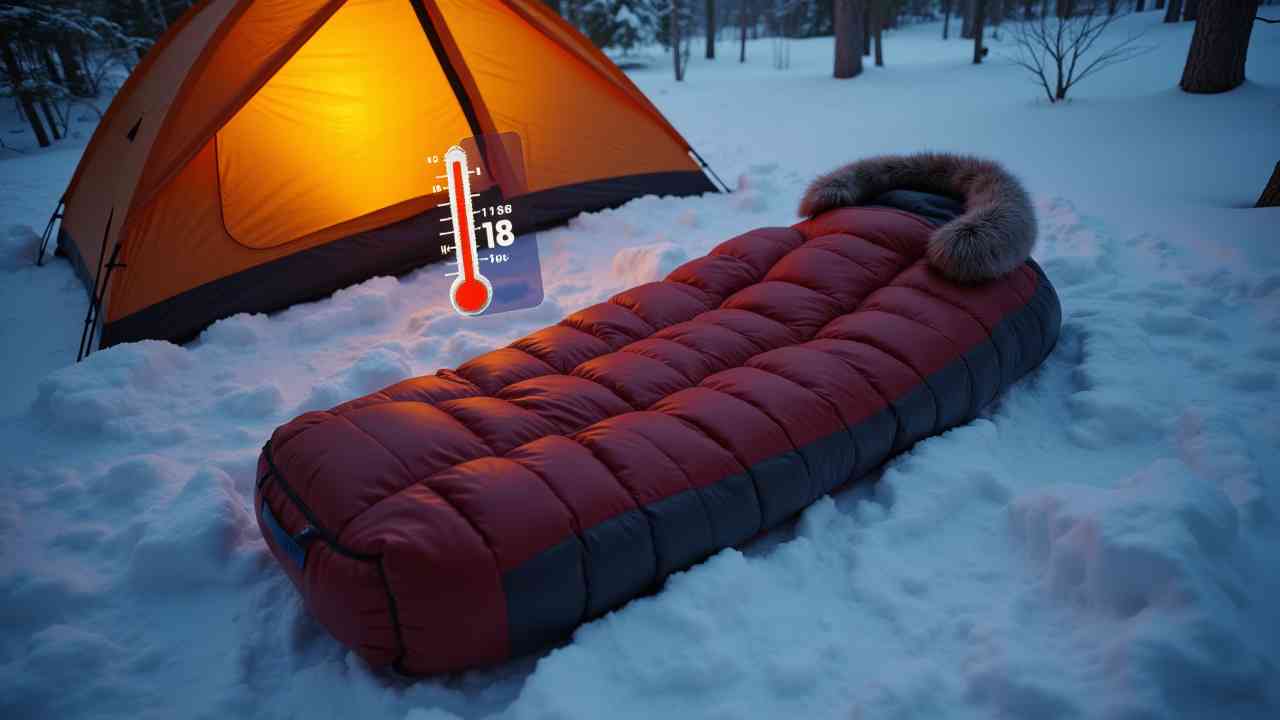
0 Degree Sleeping Bag: The Ultimate Guide 🥶
What is a 0 Degree Sleeping Bag?
A 0 degree sleeping bag is a cold-weather bag. ❄️ It is designed for severe winter conditions. The "0 degree" part is a temperature rating. This rating can be very misleading. deceptive It is the most common mistake beginners make. A 0°F rating does not mean you will be cozy at 0°F. 🚫 This rating is often the "Limit" rating. Not the "Comfort" rating. This guide will explain what that means. We will help you stay safe and warm. A 0-degree bag is a serious piece of survival gear. It is not for casual summer camping. ☀️ It is for winter adventurers. It is for high-altitude trekking. It provides essential insulation. It protects you from freezing temperatures. This is rated for 0° Fahrenheit. This equals -18° Celsius. This is a very cold, serious temperature. Choosing the right bag is critical for safety. Your life can depend on it.
The #1 Most Important Feature: The EN/ISO Rating
You must understand the temperature rating. 💡 In the past, brands just made up a number. A "0 degree" bag from one brand was a "20 degree" from another. This was confusing. It was also very dangerous. Now, we have a global standard. 🌍 It is the EN/ISO Temperature Rating. (ISO 23537). This is a standardized lab test. 🔬 It uses a heated mannequin. The mannequin has sensors. This test gives three different temperature numbers. You must know what these three numbers mean. They are: Comfort, Limit, and Extreme. When you buy a bag, look for these three ratings. If a bag only lists one number, be very careful.
1. The "Comfort" Rating
This is the most important rating for many campers. 🔑 The "Comfort" rating is the lowest temperature... 🌡️ ...at which a "standard woman" is comfortable. The test assumes she is in a relaxed posture. (Lying on her back). This is the rating "cold sleepers" should use. If you get cold easily, this is your number. A 0°F bag may have a Comfort rating of 14°F (-10°C). This means a cold sleeper will actually be comfortable at 14°F. Not 0°F. This is a huge, critical difference.
2. The "Limit" Rating (The Common Rating)
This is the number most bags are named after. Warning A "0 Degree Bag" is usually a 0°F Limit bag. The "Limit" rating is the lowest temperature... ...at which a "standard man" can sleep. 👨 He must be in a curled, fetal position to stay warm. He is "fighting against cold." He is not shivering, but he is not cozy. This rating is for "warm sleepers." This means if you buy a 0°F bag... You will probably be comfortable around 10°F to 25°F. You will be cold and curled up at 0°F. This is why people are so often cold in their bags. They misunderstand this number. 💡 Rule of Thumb: Buy a bag that is 10-15 degrees warmer than the lowest temp you expect. If you are camping at 15°F, you need a 0°F bag.
3. The "Extreme" Rating (The Survival Rating)
This number is not for camping. Ignore this rating. 🚫 The "Extreme" rating is a survival rating only. It is the temperature at which a "standard woman" can survive. 👩🔬 She can survive for 6 hours without dying of hypothermia. She will be shivering violently. She will be miserable. She may get frostbite. But she will be alive. 🏥 A 0°F (Limit) bag might have an Extreme rating of -30°F. This does not mean you can camp at -30°F. Do not ever try this. This number is for emergencies only.
Insulation: Down vs. Synthetic
Your 0 degree bag is filled with insulation. This "fill" is what traps your body heat. 🔥 There are two main types: Down and Synthetic. This choice is just as important as the rating. It affects price, weight, and safety.
Down Insulation (Goose or Duck) 🦢
Down is the fluffy plumage. It is under the feathers. It is nature's best insulator. It is the premium choice. Fill Power (FP): Down quality is measured by "fill power." (e.g., 650, 800, 950). This is not how much down is in the bag. It is how good the down is. How "fluffy" it is. ☁️ High fill power (800+) means the down is very light. It traps more air. It provides more warmth for less weight. It also compresses smaller. A 900-fill bag will be lighter and smaller than a 650-fill bag. (At the same 0°F rating).
Pros of Down:
Warmth-to-Weight: Unbeatable. Nothing is warmer for its weight. Compressibility: Packs down incredibly small. This saves backpack space. 🎒 Durability: It is a long-term investment. A down bag can last for decades if cared for. It keeps its loft (fluffiness) much longer than synthetic.
Cons of Down:
The "Wet" Problem: This is the critical flaw. 💧 When down gets wet, it clumps together. It loses all its loft. When it has no loft, it has zero insulating ability. A wet 0-degree down bag is just a heavy, useless, cold sheet. 🥶 This can be a life-threatening situation in winter. The "Hydrophobic Down" Fix: Many new bags use "hydrophobic down." (DWR down). The down is treated with a polymer. This helps it resist water. It is water-resistant. It is not waterproof. 🚫 It helps a lot. It handles dampness and condensation. But a full soaking will still defeat it. You must protect it. Cost: Down is very expensive. 💰 A 0-degree down bag is a major financial investment. 💸 Care: It requires special, gentle washing.
Synthetic Insulation (Man-Made) 🧪
Synthetic insulation is made from polyester fibers. These fibers are engineered to mimic down. They trap air in small pockets. Brands have special names for it. (e.g., PrimaLoft, Polarguard).
Pros of Synthetic:
Water Performance: This is its superpower. 🌟 Synthetic insulation insulates even when it is wet. 💦 The fibers do not absorb water. They do not clump. It will keep you warm in a damp, rainy, or humid climate. It also dries very, very quickly. A down bag can take days to dry. This is a huge safety advantage in wet, cold conditions. Cost: It is much cheaper than down. 💵 You can get a high-quality 0-degree synthetic bag for a good price. Care: It is easy to wash. You can wash it in a normal machine. 🧼 It is also hypoallergenic. (Some people are allergic to down).
Cons of Synthetic:
Weight: It is heavier than down. A synthetic 0-degree bag will be noticeably heavier than a down 0-degree bag. Bulk: It is much bulkier. It does not compress well. It will take up a lot more space in your backpack. 🎒 Durability: It has a shorter lifespan. Every time you compress it, the fibers break down a little. It loses its loft faster than down. After a few years, it will not be as warm.
The Verdict: Which One to Buy?
Buy a 0-degree DOWN bag if: You are a backpacker. Weight and pack size are your top priorities. 🚶 You are camping in dry, cold conditions. (High altitude, deep winter). You have a larger budget. You are making a long-term investment. Buy a 0-degree SYNTHETIC bag if: You are car camping. Weight and bulk do not matter. 🚗 You are camping in wet, damp, cold conditions. (e.g., Pacific Northwest). You are on a budget. 💰 You need a bag that is easy to care for.
Other Key Features of a 0-Degree Bag
A true 0-degree bag is not just a puffy sack. It is an engineered system. It has specific features designed to lock in every bit of heat. 🔥 If your 0-degree bag is missing these, it is not a true winter bag.
1. Bag Shape: The "Mummy" Cut
A 0-degree bag must be a mummy bag. 🧟 A mummy bag is tapered. It is wide at the shoulders. It is narrow at the feet. This shape is a thermal design. It is not a style choice. A rectangular bag has a lot of empty space. 📦 Your body has to heat all that extra air. This wastes energy. A mummy bag has minimal empty space. It "hugs" your body. This means your body heats the bag very quickly. It is far more efficient. It is less "roomy," but much, much warmer.
2. The Insulated Hood
This is non-negotiable. You lose most of your heat from your head. 🧠 A 0-degree bag must have a thick, insulated hood. It must have a drawcord. This is called a "cinch cord." This allows you to pull the hood tight. It should cinch down. Only your nose and mouth should be exposed. This creates a warm "cocoon" for your head. cocoon A bag without a hood is a "summer bag." It is not for cold weather.
3. The Draft Tube
A zipper is a major source of heat loss. 💨 A 0-degree bag must have a full-length draft tube. This is a thick, insulated-filled tube. It runs along the inside of the entire zipper. When you zip up, this tube seals the gap. It blocks cold air from getting in. It stops warm air from getting out. This one feature makes a massive difference in warmth.
4. The Draft Collar (Neck Baffle)
This is another key feature for winter bags. A draft collar is a second, insulated tube. It is inside the bag, at the neck level. It looks like a small scarf. It has its own cinch cord. 🧣 When you get in the bag, you cinch this collar. It seals around your neck and shoulders. This is a second line of defense. It traps all the warm air inside the main bag. 🌬️ It stops a "bellows effect." This is when your warm body heat rushes out as you move. A hood + a draft collar = a fully sealed, warm system.
5. The Zipper
Check the zipper. It should be a heavy-duty zipper. (Like a YKK brand). It should have an "anti-snag" guard. This stops the zipper from catching on the thin bag fabric. This is very important in the dark. Some bags offer a left-zip or right-zip. This is personal preference. ↔️ Some bags can be "zipped together." A left-zip bag and a right-zip bag can form a double bed. This is a great feature for couples.
Your Sleeping Pad: The Other Half of the System
You can buy a 1,000, 0-degree down bag. 💸 If you use it on the bare ground, you will freeze. A sleeping bag only insulates the top and sides. 🔑 The insulation underneath you is crushed by your body weight. Crushed insulation has no loft. It has no R-Value. It has no warmth. You will lose all your heat to the cold, hard ground. 🥶 You MUST have an insulated sleeping pad. 🧘 This is the other half of your sleep system. It is not optional. It insulates you from the ground (conduction). For 0-degree camping, you need a pad with a high R-Value. R-Value measures a pad's insulation. (Just like for a house). You need a pad with an R-Value of 4.0 or higher. An R-Value of 5-6 is better. A summer air-mattress has an R-Value of 1.0. It is useless in winter. Pro-Tip: The Two-Pad System Many winter campers use two pads. 1. A closed-cell foam pad (like a Z-Lite) on the ground first. 2. An insulated inflatable pad (like a Therm-a-Rest) on top. The R-Values of the pads add up. (R-2.0 + R-4.0 = R-6.0 total). This system is very warm. It is also safe. If the air pad pops, you still have the foam pad. You will not die. This is the gold standard for winter safety.
Conclusion: Your Winter Survival Tool
A 0 degree sleeping bag is a serious piece of equipment. 🌟 It is your lifeline in a freezing environment. When you buy one, do not trust the "0 degree" name. Look at the EN/ISO "Comfort" Rating. This is your true comfort number. Buy a bag rated 10-15 degrees colder than what you expect. Decide on your insulation:
- Down: Lighter, smaller, more expensive. Useless when wet.
- Synthetic: Heavier, bulkier, cheaper. Insulates even when wet.