🏋️♂️ What Are Olympic Weights? The Ultimate Guide to Plates & Barbells
Are you ready to get serious about strength? 🔥 Then it is time to talk about Olympic weights. This is the gold standard for lifting. They are what the pros use. They are also what you find in most serious gyms. But what makes Olympic weights different? Why are they better than "standard" 1-inch weights? This guide explains everything. Let's dig into the world of heavy lifting.
🤔 What Defines Olympic Weights?
The term Olympic weights refers to a specific standard. It is not just a brand name. It is all about one key measurement. The center hole of the weight plate. Olympic weights have a 2-inch (or 50mm) center hole. This is the defining feature. This large hole fits onto an Olympic barbell. The barbell itself is also part of this standard. This is the opposite of "standard" weights. Standard weights have a small 1-inch hole. They use a smaller, thinner bar. Olympic weights are built for heavier, safer, and more advanced lifting.
✨ What Are the Benefits of Using Olympic Weights?
Why should you choose Olympic weights for your home gym? The advantages are huge. They impact performance, safety, and durability. They are a true long-term investment.
Are They More Stable and Durable?
Yes. The Olympic barbell is 7.2 feet long. It weighs 45 pounds (20kg). This size and weight make it incredibly stable. It is perfect for heavy squats and deadlifts. The plates are also built to last. A special type, called bumper plates, can be dropped. This is vital for safety. It protects your bar, floor, and the plates themselves.
What Is the Rotating Sleeve?
This is a key feature. 🌪️ The ends of an Olympic barbell are called sleeves. These sleeves rotate. They spin independently from the bar. This is not a gimmick. It is essential for safety and performance. When you do a lift like a clean or snatch, the bar must turn. The rotating sleeve prevents joint strain. It reduces torque on your wrists and elbows.
Is Standardization Important?
Yes. The Olympic standard is universal. A 45-pound bar is 45 pounds everywhere. Any Olympic plate will fit on any Olympic bar. This makes building your collection easy. This standard also means a higher weight capacity. Most Olympic bars can handle 700+ pounds. Standard bars bend at much lower weights. Olympic weights are made for serious progress.
🫓 What Are the Different Types of Olympic Plates?
Not all Olympic weights are created equal. The plates come in different materials. Each type has a specific job. Choosing the right one is key.
What Are Bumper Plates?
Bumper plates are made of thick, dense rubber. They are designed to be dropped. 💥 This is their main purpose. They are essential for Olympic weightlifting (the sport). They are also the standard for CrossFit. You can safely drop a loaded bar. You will not damage your floor. You will not break the plate. This safety makes them a top choice for home gyms. They are quieter than iron plates.
What Are Cast Iron Plates?
These are the classic "clang and bang" weights. 🎶 They are made from solid cast iron. They are very durable. They are also much thinner than bumper plates. This thin profile is their advantage. You can fit more iron plates on the bar. This is ideal for very heavy powerlifting. You should never drop iron plates. They will break, and they will damage your floor.
What Are Competition Plates?
These are the highest grade of Olympic weights. They are precision-calibrated bumper plates. A 20kg plate must be almost exactly 20kg. This accuracy is vital for competitions. They are also color-coded for easy identification. They are beautiful but very expensive. They are not necessary for a home gym. But they are the best you can buy.
🌈 What Do the Bumper Plate Colors Mean?
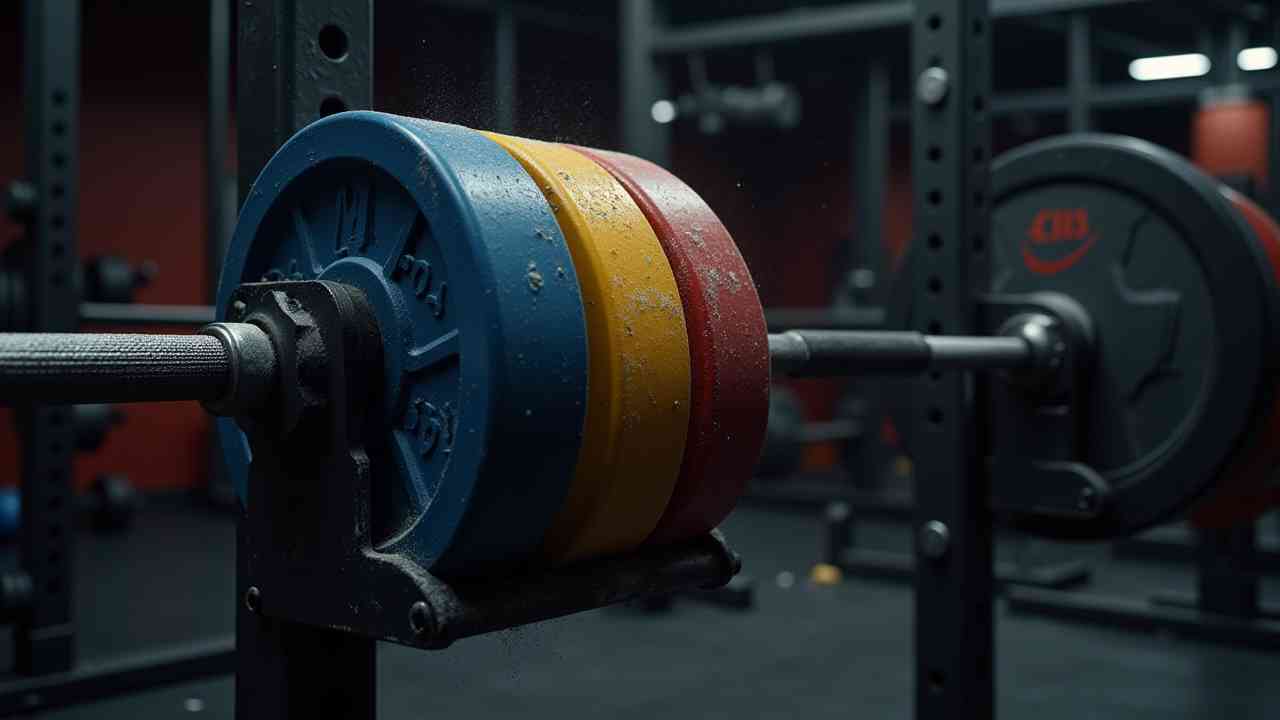
The bright colors on Olympic weights are a code. This is the IWF (International Weightlifting Federation) standard. It allows lifters and judges to identify the weight instantly. The official color code is:
Red: 25 kg (55.1 lbs)
Blue: 20 kg (44.1 lbs)
Yellow: 15 kg (33.1 lbs)
Green: 10 kg (22 lbs)
* White: 5 kg (11 lbs) Many brands that sell in pounds (lbs) use this, too. You will often see 55lb (red), 45lb (blue), 35lb (yellow), and 25lb (green) plates. Always read the number.
🏋️♂️ Is an Olympic Barbell Worth It?
Yes. The barbell is the most important part. A high-quality Olympic bar will last a lifetime. It is the interface between you and the weight. A 45-pound (20kg) bar is the standard. You will also find 15kg (33lb) bars. These are often "women's bars." They have a slightly thinner grip. The bar's "knurling" is also key. This is the rough, cross-hatched grip. Good knurling gives you a secure hold. This is vital for heavy deadlifts. This is a feature cheap bars get wrong.
✅ Should You Buy Olympic Weights for Your Home Gym?
The answer is a clear yes. If you are serious about getting strong. If you plan to lift for years. Olympic weights are the right choice. They are a bigger initial investment. They cost more than standard 1-inch weights. But their quality, safety, and durability are unmatched. They are an investment, not an expense. Standard weights are fine for light workouts. But you will outgrow them quickly. Olympic weights will grow with you. They are the true foundation of a real home gym. 🏆