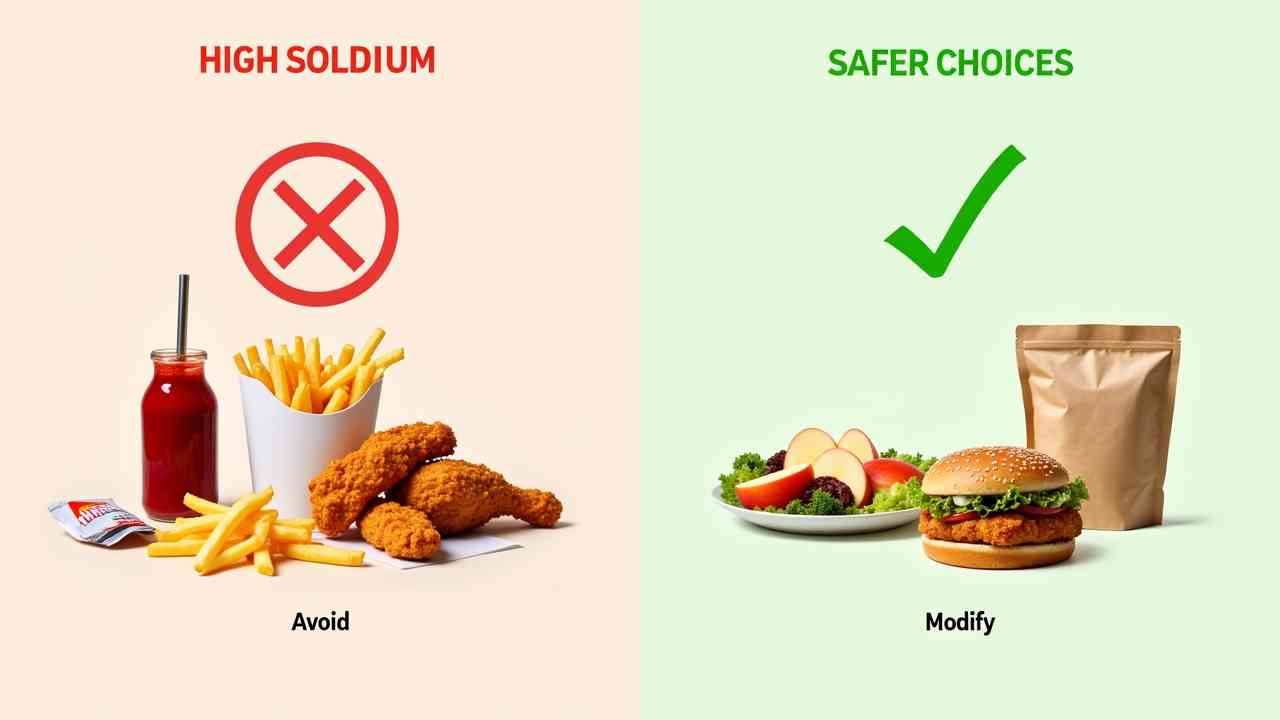
🧂 How to Eat Low-Sodium at Fast Food Restaurants (A Survival Guide)
🧂 A Survival Guide for a Low-Sodium Diet at Fast Food Restaurants 🧂
❗ CRITICAL MEDICAL WARNING: A low-sodium diet is a medical necessity for managing conditions like high blood pressure, heart failure, and kidney disease. Fast food is notoriously high in sodium and is not a safe or recommended choice for anyone on this diet. This guide is for "emergency" situations only, when you have no other option, and is not a substitute for medical advice.
Trying to find low-sodium diet fast food can feel impossible. Sodium is a cheap and effective preservative and flavor enhancer, so it is used in almost every component of a fast-food meal, from the meat and cheese to the buns and sauces. A single sandwich can often contain more than half of your entire day's sodium allowance.
However, if you are stuck on the road or in a situation with no other choice, there are ways to minimize the damage. This guide will provide the "safest" survival strategies. ✅
🤔 What Are the Golden Rules for Ordering?
Your goal is "damage control." This means modifying your order as much as possible. You must be a very specific and assertive customer.
1. Why is Checking the Nutrition Info Online the #1 Rule?
This is the most important step. Do not order until you have checked the nutrition information. Every major chain has a nutrition calculator on its website or app. Use it on your phone to build a "safe" meal. You will be shocked at how much sodium is in items you thought were healthy. This is the only way to know the real numbers.
2. How Do You Order? (Hold EVERYTHING)
To have any chance of staying low-sodium, your new magic words are "plain" and "no sauce."
- Hold ALL Sauces: This is non-negotiable. Ketchup, mayo, mustard, special sauces, and salad dressings are loaded with salt.
- Ditch the Cheese: A single slice of processed American cheese can have 250-400 mg of sodium. Always say "no cheese."
- Skip the Pickles & Bacon: These are cured with salt and are sodium bombs.
3. Choose Grilled, Not Fried
"Crispy," "crunchy," or "fried" always means a high-sodium breading. A plain grilled chicken breast or a plain hamburger patty will always be a significantly lower-sodium choice than its fried counterpart.
4. What About the Sides?
French fries are not your friend. Even a small serving, before you even add salt, is often high in sodium. Your best and safest side dish options are:
- Apple Slices
- A Side Salad (with no dressing or cheese)
- A Plain Baked Potato (with no salt, butter, or sour cream)
- What Are the "Safest" Fast Food Orders?
Here are a few examples of the "least bad" options at typical fast-food chains. Always verify with the nutrition calculator first.
- A Plain Hamburger: Just the patty and the bun. (The bun itself will still have 300-500mg of sodium).
- A Grilled Chicken Sandwich: Just the grilled patty and the bun.
- A Side Salad with a Grilled Chicken Patty on Top: Bring your own low-sodium dressing from home, or use a simple packet of vinegar.
- Plain Oatmeal: At breakfast, some chains offer plain oatmeal. Do not use the flavored packets, which are high in sugar and sodium.
Remember, this is a survival strategy, not a regular plan. The cool autumn weather is a perfect time to focus on cooking warm, delicious, and truly low-sodium meals at home where you have full control. 🍂