Working Out Before Sleep? 😴
Can You Work Out Before You Sleep?
This is a very common question. 🧐 You have a busy life. Your only free time is at 9 PM. You want to exercise. But you are worried. Will it ruin your sleep? Will you be too "wired" to fall asleep? This is a major concern for many. You have probably heard the old myth. "Never exercise before bed. It will keep you awake all night!" This advice is everywhere. But is it true? Let's look at the science. The answer is simple: The myth is mostly false. 🚫 For most people, a light or moderate workout... ...is perfectly fine before bed. It can even help you sleep. It can help you sleep deeper. And fall asleep faster. This is great news! That 9 PM workout is probably okay. But... there is a "catch." The "catch" is the type of exercise. And the timing. This guide will explain everything. We will bust the myth. We will show you the science. We will give you the safe, smart plan... ...for working out before you sleep.
The Old Myth: Why People Were Scared
Why did this myth start? It sounds logical. It is based on two simple ideas. 1. The "Adrenaline & Cortisol" Theory 🔥 This theory is simple. Exercise is "stress" on the body. This is a "good" stress. But it is still stress. When you exercise, your body releases hormones. It releases adrenaline (epinephrine). It releases cortisol (the stress hormone). These are "awake" hormones. They are part of your "fight or flight" system. They make your heart race. They make you alert. They make you full of energy. ⚡ This is the opposite of sleep. Sleep requires "calm" hormones. Sleep requires your body to shut down. The theory was: If you exercise at 9 PM... ...you will be full of adrenaline at 10 PM. You will be staring at the ceiling. You cannot sleep. This sounds logical. But it is not the full story. 2. The "Body Temperature" Theory 🌡️ This is the second part of the myth. It is also very logical. To fall asleep, your body must cool down. Your core body temperature must drop. A drop of 1-2 degrees is a key "sleep trigger." It tells your brain it is time to sleep. What does exercise do? It does the opposite. It raises your core body temperature. You get hot. You sweat. The theory was: If you are hot from a workout... ...your body cannot cool down. And if you cannot cool down... ...you cannot fall asleep. This also sounds smart. But it is also wrong. It is missing the most important part.
The New Science: The "Rebound" Effect 💡
The old theories were not wrong. They were just incomplete. Modern science has shown us "the other side" of the story. The "rebound" effect. This is the key.
The Body Temperature "Rebound"
Yes, exercise makes you hot. Your core temperature goes up. But what happens after you stop? What happens after your hot shower? Your body works hard to cool down. It overcorrects. It is called post-exercise cooling. Your body temperature does not just go back to normal. It drops below normal. This is the "rebound." This post-workout "crash"... ...is a powerful sleep signal. It is the exact temperature drop... ...that your brain needs to initiate sleep. So, the exercise causes the sleep trigger. It does not prevent it. The "hot shower" hack works the same way. A hot shower makes you hot. Your body "rebounds" by cooling you down. This makes you sleepy. Exercise is just a more powerful version of this.
The Hormone "Rebound"
Yes, exercise releases adrenaline. But only for a short time. For most healthy people... ...your cortisol and adrenaline levels return to normal... ...within 60 to 90 minutes of moderate exercise. So, a workout at 8 PM is fine. By 9:30 PM, your hormones are back to baseline. You are ready for a 10 PM bedtime. There is another, better effect. Exercise is a "stress-buster." Exercise burns off the chronic stress of your day. It burns off the "work stress" cortisol. A late-night workout can lower your overall stress. It can quiet your "racing mind." It makes you feel calm. Peaceful. And ready for sleep.
It Depends on the WORKOUT (HIIT vs. Yoga)
This is the most important factor. The myth is true for one type of exercise. Not all exercise is created equal. The type of workout... ...and the intensity... ...is the real answer. Your body has two "modes." Sympathetic ("Fight or Flight"). And Parasympathetic ("Rest and Digest").
Type 1: The "Good" Night Workouts (Sleep Aids) 🧘
These are workouts that calm you down. They are restorative. T
They activate your Parasympathetic ("Rest") nervous system. These workouts are great to do right before bed. They will improve your sleep. These workouts include:
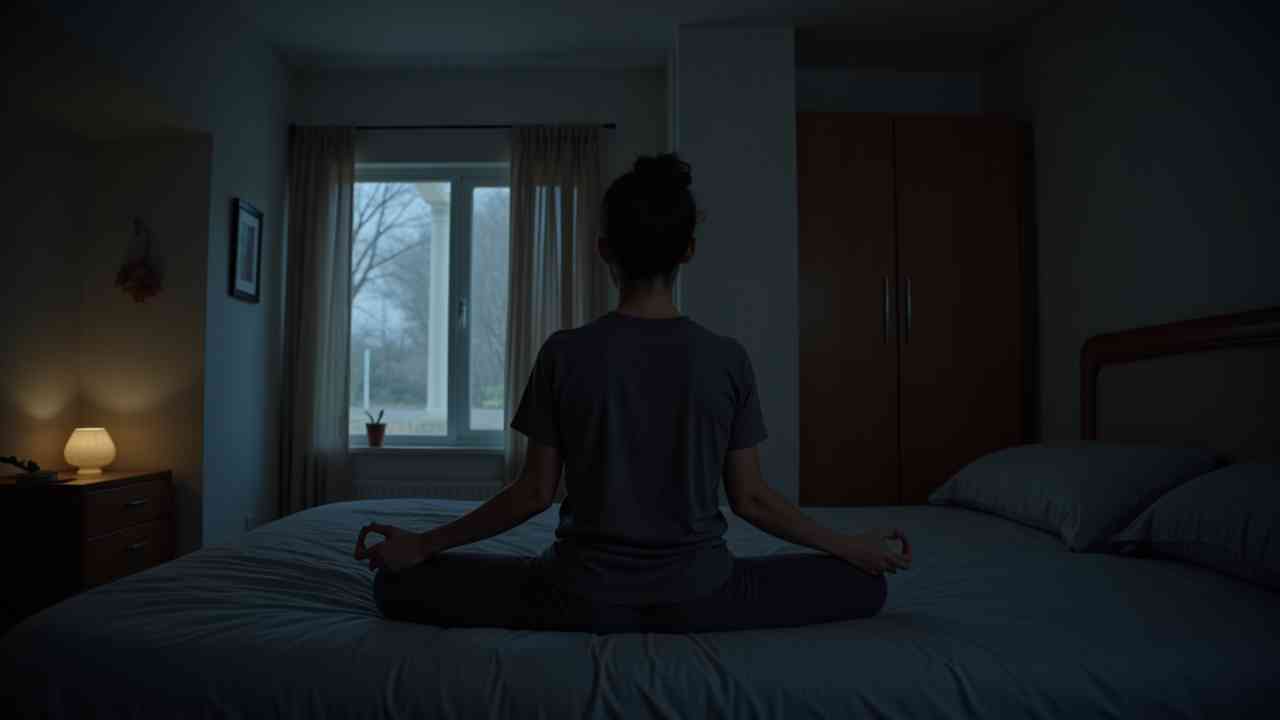
- Yoga (Yin or Restorative): 🧘 This is the #1 best choice. It is slow. It is meditative. It focuses on deep breathing. It releases muscle tension. It directly tells your brain to shut down. I
- Gentle Stretching: A simple, 10-minute stretching routine. Focus on your neck, back, and hips. This releases the "office chair" tension from your day. I
- Light Walking: A slow, 20-minute walk in the evening. (Not a power-walk). (This is a "wind-down" walk. It is very calming for the mind. T
- Tai Chi: A slow, flowing, meditative martial art. Perfect for pre-sleep. P
Type 2: The "Risky" Night Workouts (The "Wired" Ones) ⚡
These are workouts that "hype you up." They are aggressive. They are intense. They trigger a Sympathetic ("Fight or Flight") response. These are the workouts the "myth" was about. These can disrupt your sleep. If you do them too late. These workouts include:
- HIIT (High-Intensity Interval Training): This is the big one. Sprints. Burpees. Jumping. This is designed to create a massive adrenaline and cortisol spike. This is what you are trying to avoid at 10 PM. T
- Heavy Powerlifting: 🏋️ A "one-rep max" deadlift. This is a huge, neural, high-stress event. It is very taxing on the nervous system. I
- Competitive Sports: A late-night basketball game. 🏀 Or a hockey game. The competition adds mental stress... ...on top of the physical stress. You will be "wired" for hours after. T
- Intense Cardio: A 45-minute, all-out run on the treadmill. R
The 90-Minute Rule (The Buffer Zone) ⏰
This is your new rule of thumb. It is the key to safe night workouts. You need a "wind-down" period. A buffer zone. Give your body time to "come down" from the high. Give your hormones time to go back to normal. Give your core temperature time to have its "rebound drop." The rule is: Create a 90-minute "buffer zone." This is the time between... ...the end of your hard workout... ...and the time your head hits the pillow. The Schedule:
- 8:00 PM: Start your intense HIIT workout.
- 8:45 PM: Finish your workout.
- 8:45 PM - 10:15 PM: This is your 90-minute Buffer Zone. (This is your "wind-Down" time). (
- 10:15 PM: Head hits the pillow. Perfect. P
Listen to Your Body (The Final Rule) 🎧
The science is clear. For most people, night workouts are fine. But you are not "most people." You are you. And your biology is unique. You must listen to your body. It will tell you the truth. You may be a "Night Owl." 🦉 Your body loves to work out at night. You feel your strongest at 8 PM. It makes you feel calm and focused. It helps you sleep. Great! This is your natural rhythm. Embrace it. Or, you may be a "Morning Lark." 🐦 Your body loves to wake up early. You are full of energy at 6 AM. But at 8 PM, you are a zombie. A late workout feels awful. It does make you feel wired. It does make you stare at the ceiling. This is also fine! This is your body's signal. It is telling you: "This is not for me." Your body is not "broken." It is just on a different clock. The Experiment: The Sleep Journal 📝 How do you find out? Run an experiment. Be a scientist. Keep a sleep journal for one week. Try a late-night workout. Write down the answers:
- What time did I work out? (e.g., 9:00 PM - 9:45 PM).
- What type of workout? (e.g., Heavy lifting).
- What time did I go to bed? (e.g., 11:00 PM).
- How long did it take me to fall asleep? (The "sleep latency").
- How did I feel when I woke up? (Rested? Groggy?).
Conclusion: The Myth is Busted (Mostly)
So, can you work out before you sleep? Yes. Absolutely. The old myth is busted. For most people, it is safe. It is even beneficial. It is a fantastic way to relieve stress. It can help you fall asleep faster. And it can help you sleep deeper. You just have to be smart. Remember the 3 simple rules. 1. The Workout Type Matters. Gentle exercise (like yoga 🧘 or stretching) is 100% safe. You can do it right before bed. It is a "sleep aid." 2. The "Buffer Zone" Rule. ⏰ For intense exercise (like HIIT ⚡ or heavy lifting)... ...you must have a 90-minute "wind-down" buffer. Do not go from a sprint, to the shower, to the pillow. It is too fast. Your body needs time to "come down." Cool down. Shower. Dim the lights. Read a book. 3. Listen to Your Body. 🎧 You are your own expert. Try it. See how you feel. If it works for you, it works. If it does not, it does not. Do not fight your natural rhythm. D A late-night workout is a fantastic tool. It is a great way to fit exercise into a busy life. Do not be afraid of it. Just be smart. Be strategic. And enjoy the results. 🌟