Metabolic Confusion Diet 📈
What is the Metabolic Confusion Diet?
This is a popular eating plan. It is a new way to diet. It is also called "calorie shifting." Or "calorie cycling." The goal is simple: Weight loss. But it has a special "trick." It is designed to "trick" your body. To "confuse" your metabolism. This is how it gets its name. This guide will explain the theory. We will see if it works. We will also show you how to start. This is not medical advice. 🩺 Always talk to your doctor. Do this before starting a restrictive diet.
The "Old" Way vs. The "New" Way
First, let's look at a "normal" diet. A normal diet is linear. It is a straight line. A "linear" diet means you eat the same calories. Every single day. Example: You decide to eat 1,500 calories a day. You eat this on Monday. Tuesday. Wednesday. Every day. This is a classic, simple "calorie deficit." It works. But it has a big problem.
The "Starvation Mode" Problem (The Plateau)
This is a common diet problem. You eat 1,500 calories every day. You lose weight. Great! 🎉 But then, at 6 weeks, it stops. The scale does not move. This is the "weight loss plateau." Why? Your body is smart. It is a survival machine. It "adapts" to the low calories. It thinks: "Oh no! A famine is here! We are only getting 1,500 calories! We must save energy!" Your body responds. It slows down your metabolism. It burns fewer calories. This is "metabolic adaptation." It is very frustrating.
The "Confusion" Solution 💡
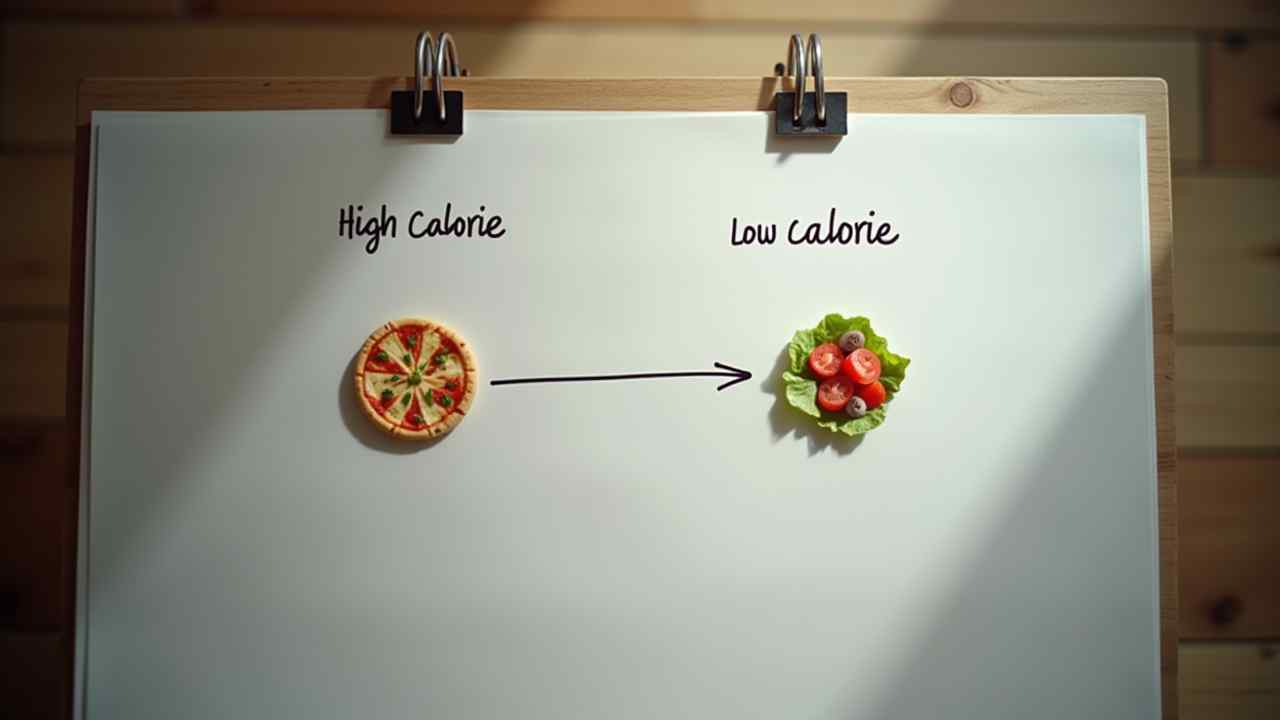
This is where the metabolic confusion diet comes in. It is a "non-linear" diet. It is not a straight line. It is an "up and down" line. You do not eat 1,500 calories every day. You alternate your calories. You "cycle" them. The Goal: To "confuse" your body. To keep your metabolism guessing. The Theory: On "high-calorie" days, your body thinks: "The famine is over! Plenty of food! Keep the metabolism high!" 🔥 On "low-calorie" days, your body burns fat. But before your metabolism can "adapt"... ...you give it a high-calorie day again. This cycle (high, low, high, low)... ...tricks your metabolism. It keeps it running fast. It prevents the dreaded "plateau." This is the entire theory. It sounds "magic." But does it work?
Does it Actually Work? (The Science) 🔬
This is the #1 question. Does it "trick" your metabolism? Is it a magic bullet? The answer is YES and NO. It is a very confusing answer. Let's break it down.
Why it WORKS for Weight Loss (The "Yes") ✅
A metabolic confusion diet absolutely works for weight loss. Guaranteed. But not for the "magic" reason. It works for one, simple, boring reason: It is a CALORIE DEFICIT. That is it. That is the entire "secret." You are still eating fewer calories... ...than your body is burning. (When averaged over the week). ( Let's look at the math. Linear Diet: 1,500 calories x 7 days = 10,500 calories (weekly). You will lose weight. Confusion Diet:
- 4 "Low" Days (1,200 cal) = 4,800 cal
- 3 "High" Days (1,900 cal) = 5,700 cal
- Total: 10,500 calories (weekly).
Why the "Confusion" is a MYTH (The "No") 🚫
This is the hard truth. The "magic" part is a myth. The "confusion" part is just a marketing term. The science for this "metabolic trick" is very weak. There is no real proof. Your metabolism is not "confused." Your body is a smart calculator. It is not easily "tricked." Your body does not run on a 24-hour clock. It runs on a weekly clock. Or a monthly one. It knows what your average calorie intake is. It is not "fooled" by one high day. A 2014 study tested this. It compared a "linear" diet... ...to a "calorie shifting" diet. The result? There was no difference. Zero. There was no "metabolic advantage." There was no "magic fat burn." Weight loss was identical. Because the deficit was identical. The "magic" is just a myth. The "math" (the deficit) is the only thing that matters.
So, Why Bother? (The REAL Benefits) 👍
Okay, so it is not magic. Why would anyone do this diet? It seems so complicated. Because it has huge psychological benefits. The benefits are in your brain. Not in your metabolism. This is why it is a better diet for many people. It is easier to stick to.
Benefit 1: It is More Flexible
A "linear" 1,500 calorie diet is a prison. Every day is the same. Every day is a struggle. A "confusion" diet has freedom. You have "high" days! You can plan these days. You can save them for the weekend. Friday night is your "high day." So you can go out for dinner. You can have a bigger meal. You can be "normal."
Benefit 2: It Stops "Binge & Restrict" Cycles
This is a common diet trap. You are "good" for 5 days. (1,200 calories). ( But on Saturday, you "snap." You are too restricted. You binge. You eat 4,000 calories. You feel guilty. You have "failed." The confusion diet plans for this. The "high day" is part of the plan. It is a "planned binge." (A "re-feed"). (This is a brilliant psychological trick. You never "fail." You are just "on a high day." This can save your sanity. It makes the diet feel easier.
Benefit 3: It Feels Better (Hormones)
The diet may not "trick" your metabolism. But it does affect your hormones. A "high-calorie" day... ...can give you a short-term boost. It can boost Leptin. (Your "fullness" hormone). ( This can make you feel less "starved." It can give you more energy. You will have a better workout. This is a real, positive benefit.
The "Cons" & Risks of this Diet Plan ⚠️
The diet is not perfect. It has some real downsides. 1. It is Complicated. 😵 This is the #1 con. You must be a master of planning. You must be a master of "tracking." You must count your calories every single day. And the number is different every day. This is a lot of work. It is a lot of math. It is very "Type-A." It can be obsessive. 2. It Can Cause Disordered Eating. This is a real risk. The "low" days can be very low. (e.g., 1,200 calories). ( This is very restrictive. The "high" days can feel like a "binge." This "binge-and-restrict" cycle... ...is a classic pattern of disordered eating. (Bulimia). ( If you have a history of this, do not do this diet. It is a very dangerous trigger. 3. The "Magic" is a Myth. This is a con. People start this diet. They think it is a magic "fat-burn" hack. They are disappointed when it is not. A calorie deficit is still hard work.
How to Start: A Sample 7-Day Plan
You want to try it. Let's make a simple, safe plan. This is just an example. Your numbers will be different.
Step 1: Find Your Maintenance Calories
This is the first step. How many calories do you burn in a day? Go online. Use a "TDEE Calculator." Let's say your "maintenance" is 2,500 calories. (This is the "no-gain, no-lose" number). (
Step 2: Set Your Average Goal
We need a calorie deficit. Let's aim for 1 lb of fat loss per week. This is a 3,500-calorie deficit. This is -500 calories per day (on average). Your new "average" goal is 2,000 calories.
Step 3: Create Your "Cycle" 🗓️
Now, we make the plan. We will use 2 "High" days. And 5 "Low" days. The High Days (Weekend): We will set these to maintenance. This is the "easy" part.
- Saturday: 2,500 calories
- Sunday: 2,500 calories
- Total: 5,000 calories
Your New "Confusion" Schedule:
- Monday: 1,800 calories
- Tuesday: 1,800 calories
- Wednesday: 1,800 calories
- Thursday: 1,800 calories
- Friday: 1,800 calories
- Saturday: 2,500 calories (High Day!) 🎉
- Sunday: 2,500 calories (High Day!) 🎉
Metabolic Confusion vs. Carb Cycling
This is a common question. Are they the same? No. They are very similar. But there is one key difference. Metabolic Confusion only cares about CALORIES. The "total" number. It does not care where they come from. Your 2,500-cal high day... ...could be high-fat, or high-carb. The plan does not care. Carb Cycling cares about MACROS. (Protein, Fat, Carbs). ( In carb cycling, your "High" day... ...is a High-Carb, Low-Fat day. (e.g., 400g carbs, 50g fat). ( Your "Low" day... ...is a Low-Carb, High-Fat day. (e.g., 50g carbs, 150g fat). ( This is a much more advanced system. It is for athletes. It is for bodybuilders. Metabolic confusion is a simpler version. It is just "calorie cycling." It is easier for beginners.
Conclusion: A Smart Tool, Not a Magic Wand
The "Metabolic Confusion" diet is a smart tool. It is a psychological tool. It is not a "metabolic" miracle. The "magic" is a myth. The "math" (the calorie deficit) is the only truth. But this diet can be a better way to diet. It is more flexible. It is less restrictive. It gives you "high days" to look forward to. This means you are more likely to stick to it. And what is the #1 best diet in the world? The one you can actually stick to. If a "linear" diet is too boring... ...and it makes you "binge"... ...then a "confusion" diet is a perfect solution. It is a smart, flexible, and effective way... ...to manage a calorie deficit. And to finally lose the weight. 🌟