3 lb Weights: The Ultimate Guide for Toning & Rehab 🏋️♀️
The Purpose of 3 lb Weights
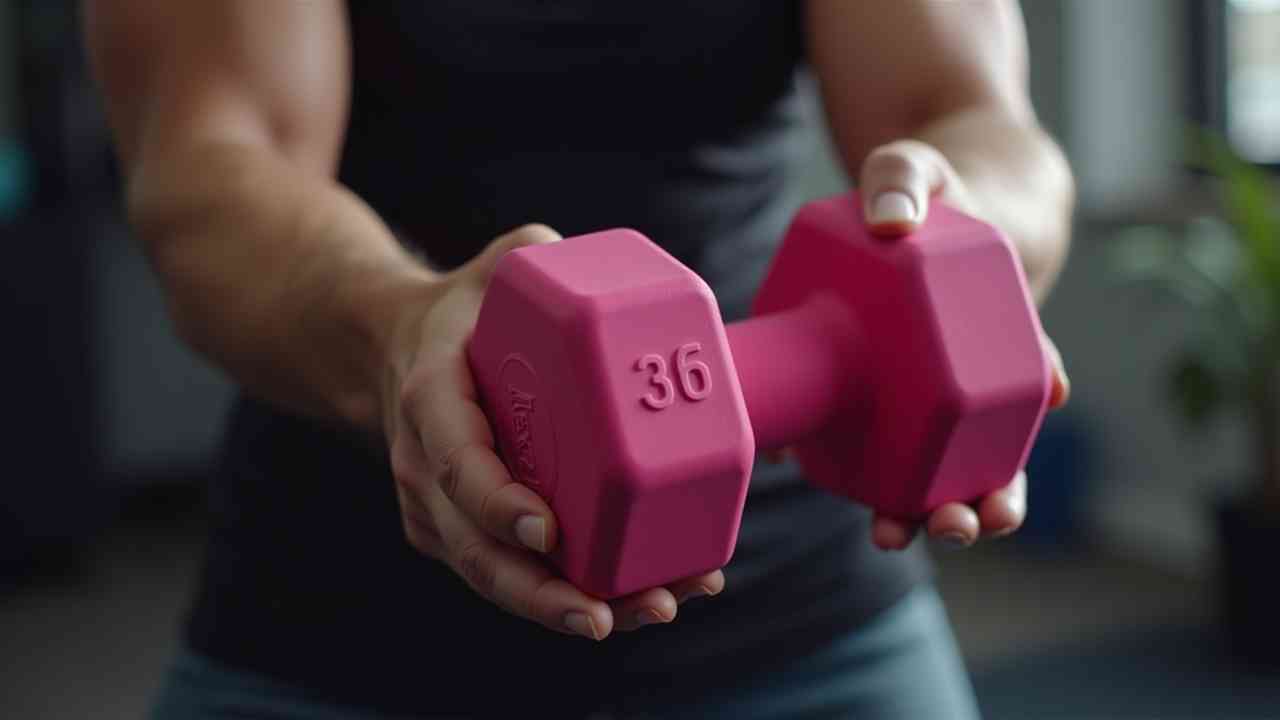
Light weights, like 3 lb dumbbells, are a fantastic fitness tool. They are often misunderstood by people chasing heavy lifts. Their purpose is not to build massive muscle bulk. Instead, 3 lb weights are designed for specific, crucial goals. These goals include toning, muscular endurance, and rehabilitation 🧘. They are perfect for beginners who need to learn form. They are also ideal for physical therapy patients. Many popular fitness classes use 3 lb weights. This includes Pilates, barre, and cardio kickboxing.
The Science of Light Weight Training
Training with 3 lb weights focuses on muscular endurance. This is different from hypertrophy (muscle size). Hypertrophy requires lifting heavy weights for fewer reps. Light weights target your Type I (slow-twitch) muscle fibers. These fibers are highly resistant to fatigue. They are responsible for endurance and posture. Working these fibers creates a "toned" or "sculpted" look. It defines the muscle without adding bulk. This type of training relies on high repetitions. You will also use shorter rest periods. This is often called "time under tension" (TUT) 🔥. The low weight allows you to maintain perfect form. You can focus on the mind-muscle connection. This ensures the correct muscle is working.
Who Benefits Most from 3 lb Weights?
While anyone can use them, 3 lb weights are ideal for specific groups. These groups value safety and endurance over raw power.
1. Absolute Beginners
If you are new to strength training, 3 lb weights are your best friend. They allow you to master proper form 🔑. Learning the movement pattern is critical. Bad form with heavy weights causes injury. Light weights build a safe foundation. They strengthen connective tissues, like tendons. This prepares your joints for heavier loads later. It is a vital first step.
2. High-Rep Fitness Classes (Pilates, Barre)
Many classes use light weights for high-rep burnout sets. Holding a 3 lb weight for a 3-minute song is brutal. The burn becomes incredibly intense. This method exhausts the slow-twitch fibers. It builds metabolic endurance. This is the secret to the "dancer's physique" 💃.
3. Physical Therapy and Rehabilitation
3 lb weights are a staple in physical therapy clinics. They are used to recover from injuries. This is especially true for the rotator cuff (shoulder). These delicate joints cannot handle heavy loads. They must be strengthened gently. Light weights isolate the small stabilizer muscles. These muscles protect the joint from future injury 🛡️. This is crucial for long-term health.
4. Active Seniors
Seniors benefit greatly from 3 lb weights. They provide enough resistance to fight sarcopenia (age-related muscle loss). They also help maintain bone density. This can reduce the risk of osteoporosis. The low weight is safe for arthritic joints. It improves functional strength. This helps with daily tasks like carrying groceries groceries 🛒.
The Top 10 Exercises for 3 lb Weights
This is a full-body routine focusing on toning and definition. Aim for 15-30 repetitions per exercise. Focus on slow, controlled movements.
1. Lateral Raises (Shoulder Definition)
This is the best move for sculpting the shoulder cap 🥥.
How to Perform:
Stand tall with a 3 lb weight in each hand. Keep your core tight. Your arms should be at your sides. With a slight bend in your elbows, lift your arms out to the side. Stop when they are parallel to the floor (shoulder height). Pause for one second. Slowly lower the weights with control. Do not swing.
2. Bicep Curls (Arm Toning)
This move isolates the front of your arm.
How to Perform:
Stand with palms facing forward. Curl the weights up toward your shoulders. Keep your elbows locked at your sides. Squeeze your bicep muscle at the top. Lower the weights slowly. Resist the weight on the way down.
3. Tricep Kickbacks (Back of Arm)
This move targets the back of the arm (triceps).
How to Perform:
Hinge forward at your hips. Keep your back perfectly flat. Your torso should be near parallel to the floor. Row the weights up. Lock your elbows at a 90-degree angle, high by your ribs. Extend your arms straight back. Squeeze the tricep. Your upper arm should not move. Only your forearm moves. Lower with control.
4. Bent-Over Reverse Fly (Posture and Rear Delts)
This move is critical for posture and back-of-shoulder definition.
How to Perform:
Hinge at your hips, back flat (like the kickback). Let the weights hang in front of you. Your palms should face each other. Keep a slight bend in your elbows. Lift your arms out to the side (like flying) 🕊️. Squeeze your shoulder blades together at the top. Lower the weights slowly. This move is very difficult; 3 lb weights are perfect.
5. Shoulder Press (Overhead Press)
This move strengthens the top of your shoulders and triceps.
How to Perform:
Hold the weights at shoulder height (goalpost position). Your palms should face forward. Keep your core braced. Press the 3 lb weights straight up overhead. Do not clank them together. Your arms should be fully extended. Slowly lower the weights back to the starting position.
6. Front Raises (Front Shoulder)
This isolates the front deltoid muscle.
How to Perform:
Stand tall, core tight. Hold the weights in front of your thighs. Lift one arm straight up in front of you. Stop at shoulder height. Keep your arm straight. Lower the arm slowly. Alternate with the other arm. This prevents you from using momentum.
7. Weighted Glute Bridge (Booty Sculpt)
This adds light resistance to a powerful glute exercise.
How to Perform:
Lie on your back. Bend your knees. Place your feet flat on the floor, hip-width apart. Place one 3 lb weight on each hip crease. Hold them in place with your hands. Drive your hips up toward the ceiling 🚀. Squeeze your glutes hard at the top. Create a straight line from knees to shoulders. Lower slowly.
8. Weighted Crunches (Abs)
This adds just enough resistance to challenge your core.
How to Perform:
Lie on your back, knees bent. Hold one 3 lb weight with both hands. Hold it against your chest or straight up over your chest. Perform a standard crunch. Lift your shoulder blades off the floor. Use your abs, not your neck. The light weight forces a stronger contraction.
9. Weighted Russian Twists (Obliques)
This move targets the sides of your abs (obliques).
How to Perform:
Sit on the floor. Lean back slightly with a straight back. Keep your core engaged. Your feet can be on the floor (easier) or lifted (harder). Hold one 3 lb weight with both hands. Twist your entire torso from side to side. Tap the weight on the floor beside your hip. Follow the weight with your eyes 👀.
10. High-Rep Squats (Endurance)
This builds leg endurance and reinforces squat form.
How to Perform:
Stand with feet shoulder-width apart. Hold the 3 lb weights at your shoulders (front rack). Keep your chest up and your back straight. Sit your hips back and down. Go as low as you can with good form. Push through your heels to stand back up. Perform 20-30 reps.
The Limitations: When to Upgrade Your Weights
3 lb weights are a tool, not a final destination for most people. Your body is incredibly adaptive. It will get used to the 3 lb load. If you want to continue making progress in strength or size, you must increase the weight. This is the principle of progressive overload. A good rule is to upgrade your weights when you can easily complete 30 reps of an exercise with perfect form. At that point, your body is no longer challenged. You are ready to move up to 5 lb or 8 lb weights. However, 3 lb weights remain valuable. Keep them for your rehab exercises. Use them for your warm-ups. Or use them for high-rep burnout sets after your heavier lifting.
Conclusion: The Perfect Tool for Endurance and Definition
3 lb weights are far from useless. They are a powerful tool for specific goals. They are the best choice for muscular endurance and high-rep toning. They are the safest option for beginners and rehabilitation. They allow you to perfect your form and build a strong mind-muscle connection. Use them for high-rep circuits. Listen to your body. And do not be afraid to upgrade when you are ready. They are a valuable and essential part of a well-rounded fitness journey 🌟.