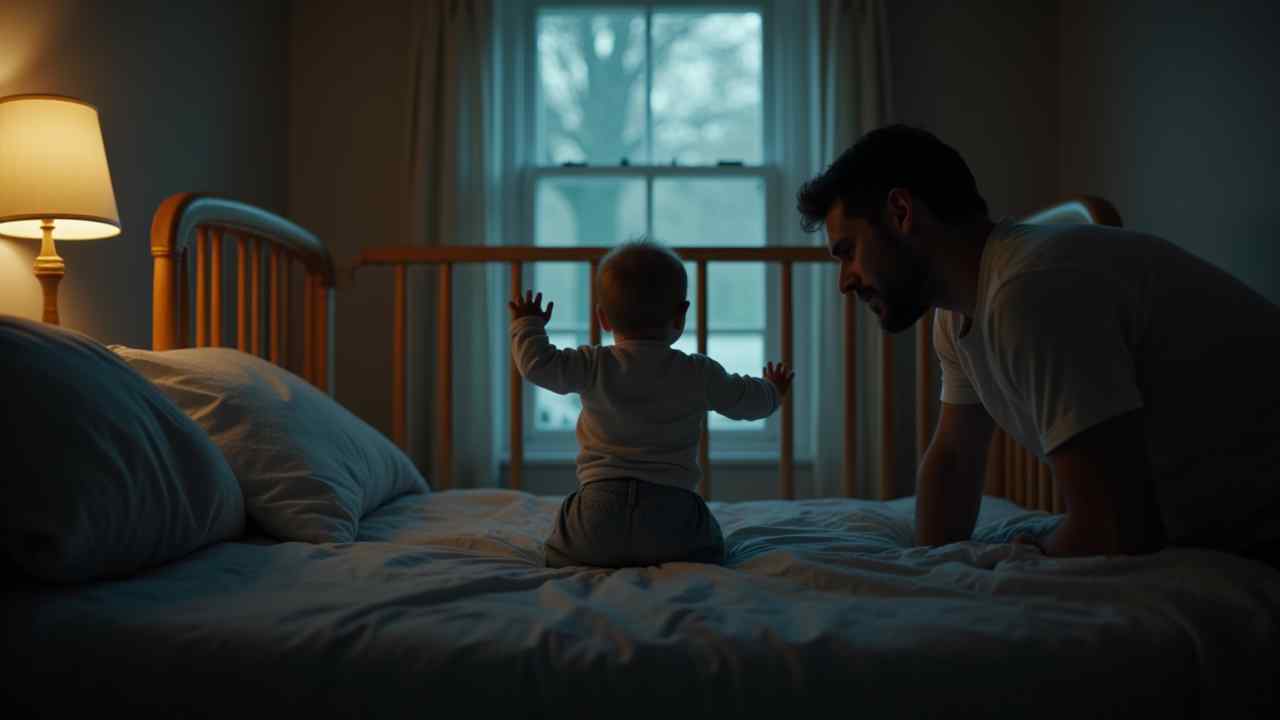
2 Year Sleep Regression 😴 (The Guide!)
The 2-Year-Old Sleep Problem
Your 2-year-old is a "big kid" now. They are talking. They are running. And they are suddenly not sleeping. You are confused. You are exhausted. 😫 You had a great sleeper. They were on a solid 1-nap schedule. They were sleeping 11-12 hours at night. You thought you had finally made it. And now, it is all broken. What happened? Welcome to the 2-Year Sleep Regression. (This is often between 22-26 months). ( It is one of the hardest regressions. Why? Because you are not fighting a baby. You are fighting a toddler. A toddler has a will of steel. They have opinions. And they have one new, favorite word: "NO!" This guide is your survival plan. 🗺️ We will explain the why behind the chaos. We will explain the 6 main causes. Then we will give you the solutions. You can get your sleep back. You can help your child. Let's begin.
How Much Sleep Does a 2-Year-Old Need?
First, let's set a baseline. 📊 Every child is different. Do not compare your child to others. But, there are healthy averages to aim for. In a 24-hour period, a 2-year-old needs: ~12 to 14 hours of total sleep. This is split between night and day.
Nighttime Sleep
Your toddler needs solid night sleep. The goal is 10 to 12 hours of consolidated sleep. 🌙 A 2-year-old can 100% sleep 12 hours... ...without a feeding.
Daytime Sleep (The Nap)
Daytime sleep is for restoration. It prevents your toddler from getting overtired. The goal is 1.5 to 2.5 hours of daytime sleep. This is where the schedule is key. At 2 years old, this sleep... ...should be a single, solid 1-nap schedule. Do NOT drop this nap! (This is a huge trap! We will cover this later). (
The "Why": The 6 REAL Causes of This "Regression"
This is the most important part. A 2-year "regression" is not one thing. It is a "perfect storm" of 6 different issues. These issues all happen at the same time. Your job is to find the real cause.
Cause 1: Independence (The "No!" Stage) 🔑
This is the #1 cause of the 2-year regression. It is a behavioral regression. Your toddler is now a "person." A tiny, stubborn, amazing person. They have "agency." They have "opinions." And they want CONTROL. What is "bedtime"? Bedtime is a boundary. Bedtime is a "rule." And your 2-year-old's #1 job... ...is to test boundaries. It is their "job" to say "NO!" This is not them being "bad." This is them being a scientist. 🧑🔬 They are learning: "What happens if I say no?" "What happens if I throw my cup?" "What happens if I scream?" Bedtime is the ultimate test. "You cannot make me sleep!" This is a battle of wills.
Cause 2: Separation Anxiety (The "Heart") 💔
This is the #2, very real, emotional cause. This anxiety often peaks around this age. Your child understands object permanence. They know that when you leave... ...you are still out there. And you are not with them. This causes real anxiety. Real fear. ("Is Mommy coming back?!"). ( This is why they scream at bedtime. They are afraid you will leave. This is why they wake up at 2 AM. They check their crib. You are not there. They panic. They must "call" for you. This is not a "manipulation." It is a real, developmental fear.
Cause 3: FOMO (Fear Of Missing Out) 🎉
This is a new, big-kid problem. FOMO. Your 2-year-old is not a baby. They are aware of the world. They know... ...that when they go to bed... ...you are still awake. You are still out there! You are (probably) watching TV. Or eating ice cream. Or (God forbid) laughing. They want to be at the "party"! They do not want to "miss out." This is why they "stall" at bedtime. "One more book!" "Water!" "I need a hug!" "I need to pee!" (Even if they are not potty-trained). ( This is a "stalling" tactic. It is driven by FOMO.
Cause 4: Developmental Leaps (The "Brain") 🧠
This is the "brain" part. Your 2-year-old's brain is on fire. It is "upgrading" every day. They are having a language explosion. (Learning 10 new words a day!). ( They are learning new motor skills. (Running, jumping, climbing). ( Their brain is so active... ...that it is hard to shut off. You put them in their crib. They are tired. But their brain just wants to practice. They will sing their new songs. They will practice their new words. They will jump in the crib. They are "wired."
Cause 5: Environmental Changes (The "Bed") 🛏️
This is a huge, parent-caused problem. The "Toddler Bed" Trap. You think, "My child is 2!" "It is time for a 'big kid' bed!" This is often the #1 cause of this regression. We will cover this in its own section. It is that important. Other changes are also a problem. (A new baby? A new house? Starting preschool? Potty training?). ( These are "insecurity" triggers. They make the anxiety worse.
Cause 6: 2-Year Molars (The "Teeth") 🦷
This is the final, physical cause. It is a real, painful problem. The 2-year-old molars are the worst. They are the "big guns" in the back. They are huge. And they are very painful. This pain can absolutely cause... ...night wakings. And nap refusal. It makes them cranky. The Fix: If it is just teething... ...ask your pediatrician about pain relief. (Tylenol/Motrin). ( Giving pain relief 30 minutes before bedtime... ...can be a lifesaver.
The "Toddler Bed" Trap (A CRITICAL Mistake) 🚫
This is the most important "pro-tip." Please, listen to this advice. You are so excited to buy a "toddler bed." Do not do it. Please. A CRIB IS A SAFE SPACE. A CRIB IS A "SLEEP CAGE." (In a good way). ( A crib has boundaries. It tells your child: "This is your sleep space." "You cannot get out." This boundary is comforting to them. It is their "nest." A TODDLER BED HAS NO BOUNDARIES. A toddler bed is a "freedom" bed. It is a "party" bed. What does a 2-year-old do... ...with 100% freedom... ...at 3:00 AM? They will get out of bed. They will come to your room. They will get their toys. This is a 10/10, parent-created disaster. You have given a person with zero impulse control... ...100% impulse freedom. The Rule: Keep your child in the CRIB... ...for as long as possible. Until they are 3 years old. Or 3.5 years old. "But they are climbing out!" This is the only reason to switch. If they are "climbing out"... ...the crib is now dangerous. (They will fall and get hurt). ( If this happens, you must switch. But try to "lower" the mattress first. (All the way to the floor). ( And put them in a "sleep sack" (wearable blanket). This is a "climb-blocker"! They cannot "swing" their leg over the rail. This hack can buy you 6 more months.
The 5-Step Survival Plan (The "Fixes")
Okay, so you have these 6 problems. How do you fix it? You must be a loving, calm, and consistent leader. Consistency is the only way out.
Step 1: HOLD THE BOUNDARY (The #1 Rule) 🛡️
This is the most important rule. Your child is testing you. (Cause #1: Independence). ( They are asking: "Do you mean it?" "Is this really bedtime?" "Or can I scream for 20 minutes... ...and get 3 more books?" You must be a "calm robot." You must be boring. And you must be firm. The boundary must be rock solid. If you "give in" one time... ...(e.g., "Okay, fine! One more book!")... ...you have taught them... ...that "screaming for 20 minutes" works. You have just trained them to scream. This is a disaster. You must be calm. Loving. But 100% consistent. The boundary is the boundary.
Step 2: The Bedtime Routine (Your "Anchor") ⚓
This is your #1 tool to fight anxiety. (Cause #2: Anxiety). ( A toddler with anxiety... ...needs predictability. They need to know what is coming. Predictability = Safety. You must have a bedtime routine. It must be the exact same every single night. A 20-30 minute "wind-down." Example:
- 7:00 PM: Bath (10 min). (This is a great "sleep" signal). (
- 7:10 PM: PJs, Diaper, Sleep Sack. (In a dim, quiet room). (
- 7:20 PM: Books (2 books. Only 2!).
- 7:25 PM: Song. (Sing 1 song). (
- 7:30 PM: Bed.
Step 3: Offer (Fake) Control 💡
This is the "hack" for the "No!" stage. (Cause #1: Independence). ( Your toddler needs to feel "in control." So, let them be in control. Of the small things. This is the "2-Choice" rule. Do not ask "open" questions. (e.g., "What PJs do you want?"). ( Ask "closed" questions. Give them two, pre-approved choices. The Script:
- "Is it time for bed?" (Answer: "NO!"). (This is a bad question. D
- "It is time for bed." (This is a statement). (
- "Do you want your red PJs or your blue PJs?" (You do not care. But they do. They get to choose!).
- "Do you want the dinosaur book or the truck book?" (You are still only reading 2 books. But they get to choose which 2).
Step 4: Check the Schedule (The "Nap") ⏰
This is the "awake" problem. (Cause #3: FOMO). ( If your 2-year-old is not tired... ...they will fight you. For hours. Maybe... their nap is the problem. The "Nap Drop" Myth: This is a huge trap. You think, "They are fighting the nap!" "They must be ready to drop the nap!" NO. A 2-year-old needs a nap. (99% of them). ( If you "drop" the nap... ...you will have a screaming, overtired monster... ...from 4 PM until 6 PM. It is a disaster. The Real Fix (The "Nap Cap"): The nap is probably too long. Or it is too late. A 2-year-old needs a "wake window"... ...of 5 to 6 hours before bed. If your child naps from 2 PM to 5 PM... (A 3-hour nap)... ...they will NOT be tired at 7:30 PM. (That is a 2.5-hour window!). ( You must cap the nap. You must be the "bad guy." You must wake your sleeping toddler. The Rule: A nap should not go past 3:00 PM. (Or 3:30 PM, max). ( Wake them up at 3:00 PM. This gives them a 4-5 hour window... ...to build up "sleep pressure" for bedtime. This one fix... ...can solve 50% of all "bedtime battles."
Step 5: The "Silent Return" (The "Hack")
This is for the "toddler bed" escapee. (If you made the mistake... ...or they are a "climber"). ( They get out of bed. They come to your room. It is a "game." You must be the "boring robot." Do not engage. Do not talk. Do not get angry. Do not get "fun." The "Supernanny" Method: 1. No eye contact. No talking. No emotion. 2. Gently take their hand. Walk them back to their bed. 3. Put them in bed. Say your one "sleep phrase." ("It's sleepy time."). ( 4. Walk out. Close the door. 5. They will get out again. (In 10 seconds). ( 6. You will repeat this. And repeat. The first night, you might do this 100 times. (This is not a joke). ( The second night, you will do it 40 times. The third night, 5 times. They are learning: "This is boring." "This 'game' is not fun." "I get nothing from this." "I guess I will just stay in bed." This is the fix. It just takes 3-5 hard nights. Be consistent.
Sample 2-Year-Old Sleep Schedule (1-Nap) 🗓️
This is a sample. Do not follow this clock. Follow your child's wake windows. This is a good, stable goal for a 2-year-old. The Wake Windows: 5.5 hours / 5 hours
- 7:00 AM: Wake for the day ☀️
- (Wake Window 1: 5.5 hours)
- 12:30 PM: Nap (Sleep 2 hours)
- (You must cap this nap by 2:30 PM!)
- 2:30 PM: Wake up
- (Wake Window 2: 5 hours)
- 7:00 PM: Start Bedtime Routine (Bath, Feed)
- 7:30 PM: Bedtime 🌙
Conclusion: This is a Phase, Not a Failure
The 2-year regression is hard. It is a major, messy transition. It is a "battle of wills." IYou are not a bad parent. Your child is not broken. This is a normal, healthy, developmental phase. It is a good sign! It means your child is smart. And independent. And attached to you. Your job is to be the anchor. ⚓ You must be the calm, confident, loving leader. Remember the 3 Rules: 1. HOLD THE BOUNDARY. (Be 100% consistent). ( 2. GIVE (FAKE) CONTROL. ("Red PJs or blue PJs?"). ( 3. CAP THE NAP. (No sleeping past 3 PM!). ( This phase will pass in 1-2 weeks. (If you are consistent). ( You will get through this. And you will all be sleeping soundly again. You can do this. 🌟