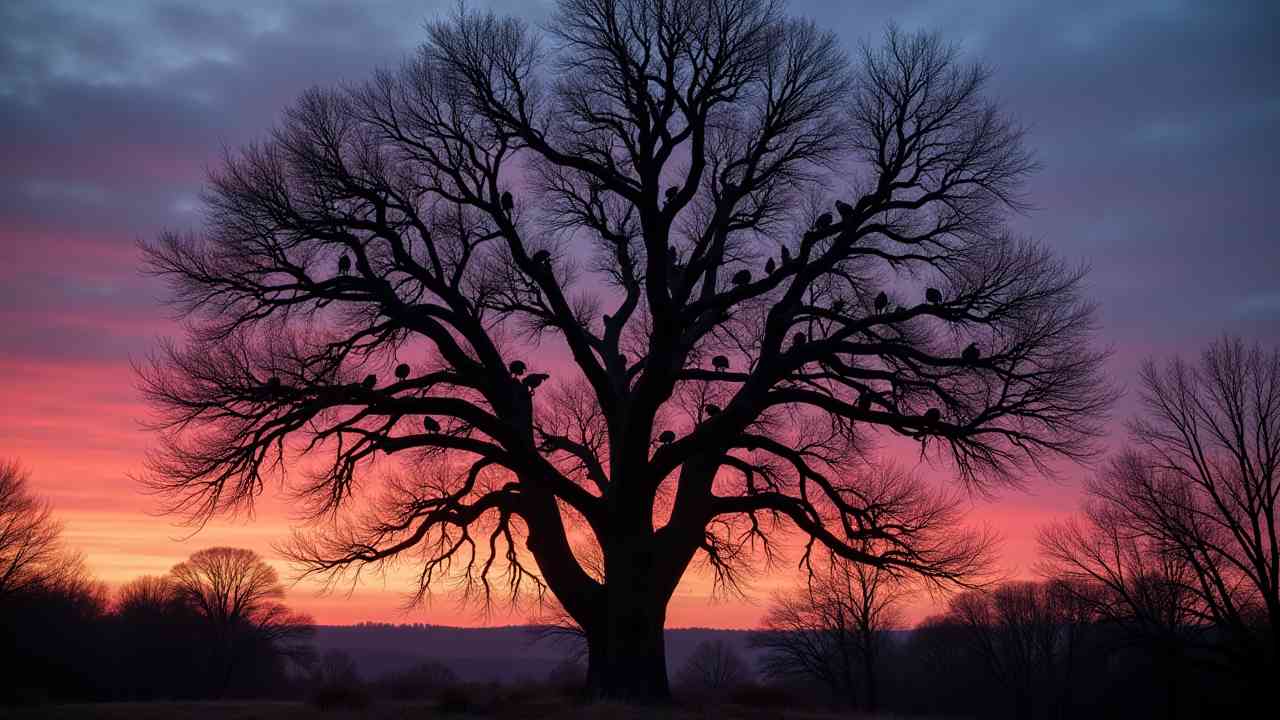
Where Do Turkeys Sleep? The Roosting Secret 🦃🌳
Where Do Turkeys Sleep? The Answer is in the Trees
Where do turkeys sleep? This is a very common question. 🧐 The answer is simple, but smart. Wild turkeys sleep in trees. 🌳 This behavior is essential for their survival. It is an instinct. It protects them. They do not sleep on the ground. 🚫 The ground is far too dangerous at night. This nightly habit has a specific name. It is called "roosting." A turkey roost is just a group of turkeys. 😴 They are sleeping together in a tree. This is a fascinating and vital behavior. It shows how smart these birds really are. But not all turkeys sleep in trees. The answer is different for farm turkeys. This guide explains both types. 🦃
Why Do Wild Turkeys Sleep in Trees?
The reason is one word: safety. Wild turkeys are large birds. They are heavy. They spend their entire day on the ground. They walk and forage for food. foraging They look for insects, nuts, and seeds. They are very successful on the ground. But the ground is a dangerous place. 😥 Especially when it is dark. Turkeys have many natural predators. These predators are a constant threat. They are most active at night.
The Predator Problem 🐺
Turkeys have poor night vision. They are nearly blind in the dark. 👁️ This makes them extremely vulnerable. They cannot see a predator approaching. They cannot run. They cannot fight back. Ground predators are very effective hunters. These predators include:
- Coyotes
- Foxes (Red and Gray)
- Bobcats
- Raccoons
- Opossums
- Large Snakes (in some areas) 🐍
How Trees Provide Safety
Trees are the perfect refuge. 🛡️ They offer several key advantages. 1. Height and Elevation: This is the most obvious benefit. Most of their predators cannot climb. 🧗♂️ Coyotes and foxes must stay on the ground. A turkey 40 feet up is completely safe. 2. Early Warning System: Some predators can climb. Raccoons and bobcats are skilled climbers. But a tree branch is not a silent place. If a bobcat tries to climb the tree... 🐆 ...it will shake the branches. It will make noise. This vibration acts as an alarm bell. 🔔 The turkeys will wake up. They will explode. They will fly away to a different tree. They are safe. 3. Better Visibility (at Dawn/Dusk): From a high branch, a turkey can see. They can scan the area. They check for danger. This helps them decide if it is safe to fly down. The roost gives them a perfect vantage point. 🔭
The Nightly Roosting Ritual
Roosting is not a random event. It is a daily ritual. It is a structured part of their lives. The flock follows this routine every single day. It starts at dusk. It ends at dawn. 🌇
Step 1: The "Fly-Up" (Dusk)
As the sun begins to set, the turkeys get ready. The flock will gather near their roost site. They often choose the same area. This is a traditional roost. They prefer tall, mature trees. 🌲 Oaks, maples, pines, and cottonwoods are favorites. They look for trees with strong, open branches. They need "runways" to fly into. The turkeys will start to get vocal. They "cackle." This is a social call. "It's time to go to bed." Then, the "fly-up" begins. One by one, the birds launch themselves. They use a powerful burst of wing beats. They fly straight up into the high branches. It is a noisy, clumsy, amazing sight. 😲 They crash onto the limbs. They make a lot of noise. They are not graceful landers. They will flap and shuffle. They find their spot. They find a good, stable branch. ⚖️ They spread out on the branch. They give each other space. The dominant birds often get the best spots. This is the "pecking order." The safest spots are high. They are on thick branches. Younger birds (jakes) may be on lower limbs. The flock settles in as darkness falls. 🌑
Step 2: Sleeping Through the Night
How does a turkey stay on a branch? 🤔 They do not fall off. Even in high winds. They have a built-in safety mechanism. It is an amazing adaptation. 💡 It is in their feet and legs. When a turkey bends its knees (its ankle, really)... ...a tendon in its leg automatically pulls tight. 🦾 This tendon system forces the toes to close. They clamp shut. This is called a locking tendon. The turkey's foot locks onto the branch. It is like a living clamp. The bird's own body weight keeps the clamp shut. They cannot fall. They are locked in place. They are completely secure until they stand up. They sleep in this position all night. They are very still. They are conserving energy. They are vulnerable to aerial predators. 🦉 A Great Horned Owl is a major threat. Owls are silent hunters. They can snatch a turkey from a branch. This is the main risk of roosting. But it is safer than the ground.
Step 3: The "Fly-Down" (Dawn)
As the first light appears, the flock wakes up. They do not fly down right away. They are cautious. They wait. 🕵️ They wait for enough light to see the ground. They scan for predators. Is it safe? The dominant male (the Tom) will often "tree call." This is a specific gobble. It is a "wake up" signal. 🗣️ It tells the hens, "I am here. All is well." Then, the fly-down begins. One by one, the birds launch off the branch. They glide down to the ground. 🪂 They often land in an open field. This gives them a clear view. They can check for danger one last time. Once on the ground, the flock gathers. They begin their day of foraging. ☀️ The cycle is complete.
The Exception: Baby Turkeys (Poults)
There is one big exception to this rule. Baby turkeys are called "poults." For the first few weeks, poults cannot fly. 🐣 They are too small. Their flight feathers are not developed. This makes them extremely vulnerable. They cannot fly up to a tree for safety. So, where do they sleep? 🤔 Poults sleep on the ground. They sleep under their mother. (The "hen"). The hen finds a very safe, hidden spot. 🤫 This spot is usually in tall grass. Or under a thick bush. The hen will spread her wings and tail. She covers her babies. The poults huddle under her body. This is called "brooding." This provides two things: 1. Warmth: Poults cannot regulate their body temp. The hen's body is their heater. 🔥 2. Camouflage: The hen's feathers hide them completely. She looks like a lump on the ground. This is the most dangerous time in a turkey's life. A predator (like a snake or raccoon) can find them. The hen will defend her poults fiercely. ⚔️ But she cannot always win. After 2-3 weeks, the poults' wings grow. They learn to fly. They can "flutter" up. The hen will teach them. They start by roosting on low branches. Or they may roost on a log or a fence. They gradually get higher and higher. By the time they are a few months old, they are roosting high in the trees. 🌳 They have learned the most important survival skill.
What About Domestic Turkeys? (The Farm)
This is the other side of the story. Domestic turkeys are very different. 🧑🌾 We have changed them through selective breeding. Specifically, we bred them for meat. The most common farm turkey is the Broad-Breasted White. This bird is very large. It has a massive amount of breast meat. This makes them too heavy to fly. 🚫✈️ A domestic tom can weigh over 40 pounds. A wild tom weighs 15-25 pounds. The domestic bird's breast is too large. Its wings are too small. It cannot get off the ground. It has lost its secret weapon. So, where do domestic turkeys sleep? They sleep on the ground. But this is safe for them. Why? Because they are in a barn or a coop. 🏠 They are protected from all predators. There are no coyotes in the barn. They are also protected from the weather. 🌨️ They do not need to fly up into a tree. Their survival instinct has been removed. We provide the safety.
Barns and Perches
Inside the barn, turkeys are given bedding. This is usually soft straw or wood shavings. 🛌 They will often huddle together in groups. This is for warmth and social comfort. This can also be a problem. Sometimes, turkeys "pile." They pile on top of each other. This can suffocate the birds on the bottom. 😥 Farmers must manage this piling behavior. To prevent this, many farmers provide low perches. 🪜 Turkeys still have a natural instinct to perch. They like to be off the ground. They just cannot fly up high. So, a farmer builds perches. These are only 1 or 2 feet off the floor. The turkeys will happily hop up onto these low bars. This makes them feel secure. It gives them a sense of "roosting." It also keeps them clean. They are up off the manure. So, a farm turkey sleeps on the ground. Or on a very low perch. They are safe, warm, and well-fed. But they have lost their wild ability to fly.
Seasonal Roosting Habits
Wild turkeys change their roosts with the seasons. They are smart about conserving energy. 💡
Winter Roosting
In the winter, finding a good roost is vital. A turkey must save all its energy. It needs to stay warm. They will choose coniferous trees. 🌲 Trees like pines or hemlocks are perfect. Why? The dense needles block the wind. They also catch the snow. This provides a natural shelter. It is much warmer. They also often choose trees on a slope. A slope that faces south or east. This slope catches the first morning sun. ☀️ The turkey can warm up faster in the morning. This saves precious calories.
Summer Roosting
In the summer, warmth is not a problem. Airflow is the main goal. 💨 They will choose large, deciduous trees. (Oaks, maples). These trees have large, open branches. The leaves provide camouflage. The open structure allows a breeze. This keeps them cool on hot nights. Roost sites are often near a water source. 💧 They are also near an open field. This is the "fly-down" zone. The turkeys can land safely. They can see danger. Then they can walk to the water for a morning drink. Their entire routine is planned. It is efficient and safe.
Conclusion: A Smart Survival Strategy
So, where do turkeys sleep? 😴 Wild turkeys sleep in trees. 🌳 This is called roosting. It is their #1 defense. It protects them from ground predators. (Coyotes, foxes). They have a special foot tendon. It locks them to the branch. They fly up at dusk. They fly down at dawn. Baby turkeys (poults) sleep on the ground. 🐣 They hide under their mother's wings. This is until they can fly. Domestic (farm) turkeys sleep on the ground. 🏠 They are too heavy to fly. They sleep in safe barns. They often use low perches. This makes them feel secure. The wild turkey's roost is a perfect adaptation. It is a smart solution to a deadly problem. It is a key part of their survival. 🌟