Weights Plates: The Ultimate Guide to Iron vs. Bumper 🏋️♂️
What Are Weight Plates? The Foundation of Strength
Weight plates are the heavy, circular discs used with barbells or dumbbells to add resistance. They are the most fundamental tool for progressive overload 🏋️♂️. Progressive overload is the principle of gradually increasing weight. This is the only way to stimulate continuous muscle growth and strength gains. Without plates, progress is impossible. Choosing the right type of weight plate is crucial. Your choice depends on your training style, your barbell, and your budget. The main differences are in the center hole diameter and the plate material.
The Critical Difference: Olympic vs. Standard Plates
The most important distinction is the diameter of the center hole. This determines which barbell your plates will fit. Mismatching is a common and costly beginner mistake.
1. Olympic Plates (The 2-Inch Standard)
Olympic plates have a 2-inch (50mm) center hole. They are designed to fit on a standard 7-foot Olympic barbell 📏. This is the size used in all commercial gyms, powerlifting meets, and CrossFit boxes. Olympic plates are the gold standard for any serious or long-term strength training. They are more stable, secure, and versatile. If you plan to lift heavy, you must use Olympic plates.
2. Standard Plates (The 1-Inch Home Standard)
Standard plates have a smaller 1-inch center hole. They are designed for cheaper, lighter home-use barbells and dumbbell handles. These plates are generally less expensive. However, they are not suitable for heavy lifting. The 1-inch bars have a low weight capacity (often under 200 lbs) and can bend or break easily ⚠️. It is highly recommended to invest in the Olympic standard from the start.
Plate Material: Iron vs. Bumper Plates
Once you choose a size (ideally Olympic), you must select the material. This choice depends on the type of lifting you plan to do.
1. Iron / Steel Plates (The Classic Choice)
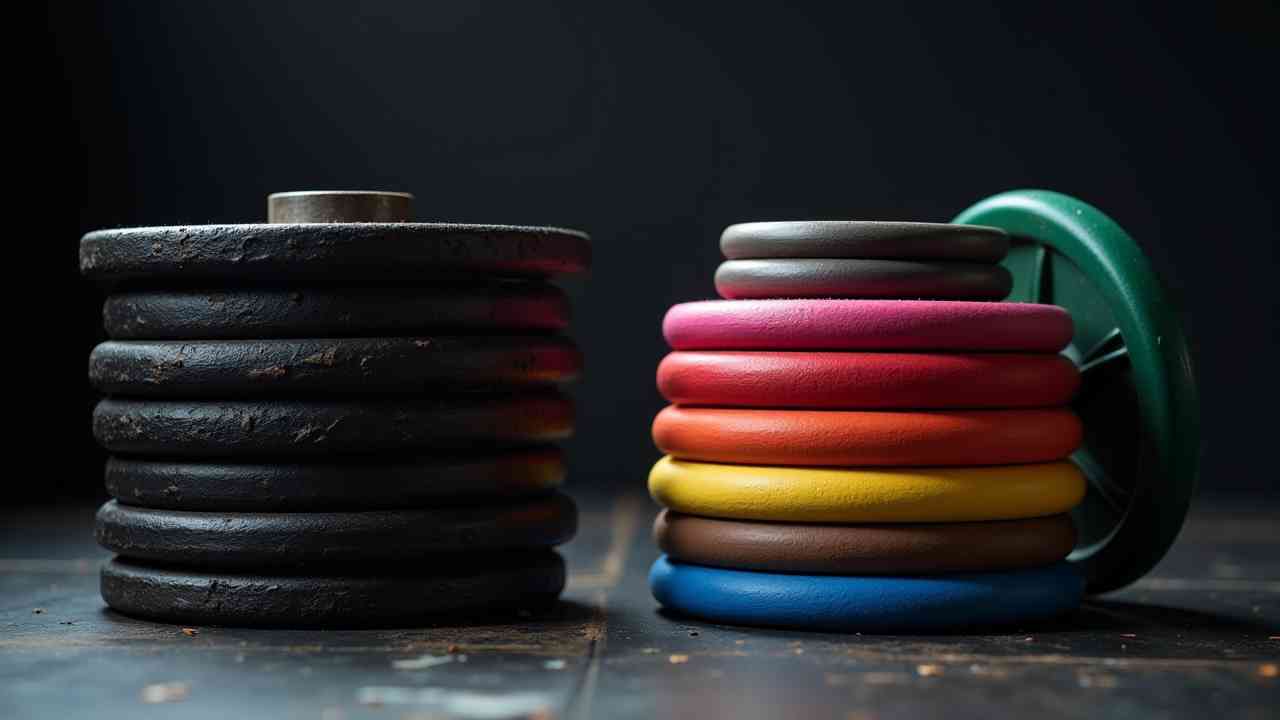
Cast iron or steel plates are the traditional option. Their main advantage is density. Because metal is dense, the plates are thinner. This allows you to load more total weight onto the barbell 🦾. Iron plates are ideal for powerlifting and general strength training. This includes lifts like the squat, bench press, and deadlift (when controlled). The major drawback is that iron plates cannot be dropped. Dropping them will damage the plate, your bar, your floor, and create a loud noise. They must be lowered with control at all times.
2. Bumper Plates (The Modern Choice)
Bumper plates are made from high-density, solid rubber with a steel inner ring. Their primary advantage is that they can be safely dropped from overhead 💥. This is absolutely essential for practicing Olympic lifts (the snatch, clean and jerk). It is also the standard plate used in CrossFit. Bumper plates are much quieter and safer for your floor. Their main disadvantage is thickness. Rubber is less dense than iron. This means bumper plates are much wider. This limits the maximum amount of weight you can physically fit on the bar. High-quality bumper plates are also more expensive than iron.
3. Rubber-Coated Plates (The Hybrid)
These are simply iron plates with a thin rubber coating. These are NOT bumper plates. The coating is only designed to reduce noise and prevent minor scuffs. Dropping them will crack the internal iron core. Do not confuse these with true, solid bumper plates.
Specialty Plates for Advanced Training
Beyond the basics, specialized plates help you fine-tune your progress and break through plateaus.
Fractional Plates
Fractional plates (or "micro plates") are very small plates. They weigh as little as 0.25 lbs or 0.5 lbs. They are essential for intermediate and advanced lifters 💡. When your progress stalls, adding 5 lbs to a lift can be too much. Fractional plates allow you to make tiny, 1-pound jumps. This ensures you can consistently apply progressive overload.
Technique Plates
Technique plates are lightweight (5-10 lbs) plastic plates. They are the same full diameter as a standard 45lb bumper plate. This allows beginners to practice the correct starting position for deadlifts or Olympic lifts. They ensure the bar is at the proper height off the floor without adding heavy weight.
Conclusion: Choose Based on Your Sport
When buying weight plates, first choose your standard. Always choose Olympic (2-inch) for long-term progress. Then, choose your material. If you are powerlifting or bodybuilding, iron plates are efficient and cost-effective. If you are doing Olympic lifting or CrossFit, bumper plates are non-negotiable for safety. Investing in a quality set of plates is a one-time purchase that will last a lifetime 🌟.