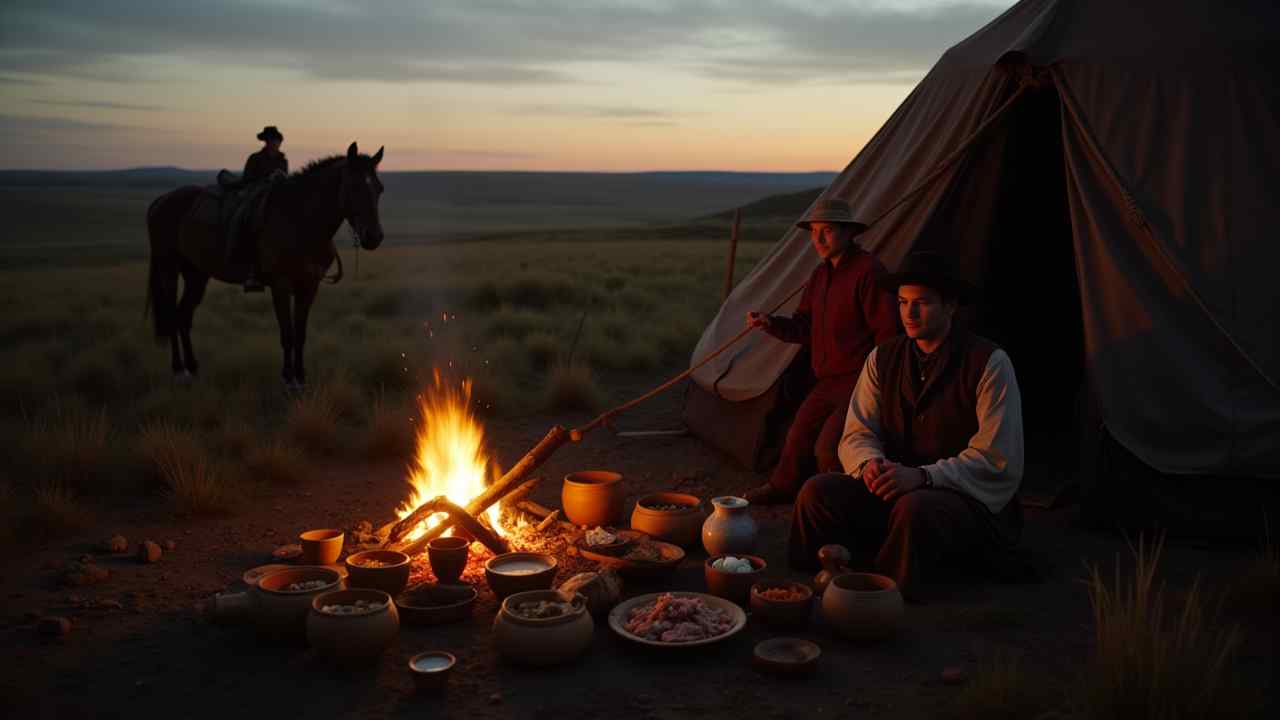
🐴 The Steppe Diet: What Fueled the Ancient Nomad Warriors?
🐴 What Was the Ancient Steppe Diet? (Fuel of the Nomad Empires) 🐴
The Eurasian Steppe is a vast ocean of grass. It stretches from Hungary to Mongolia. For millennia, it was home to nomadic warriors. Groups like the Scythians, Huns, and Mongols thrived here.
Their survival depended on a unique way of eating. This is known as the Steppe diet. It was not a health trend or a choice. It was a perfect adaptation to a harsh environment. It was born of necessity and ingenuity.
This guide explores the historical Steppe diet. We will look at what these people ate. We will see how their food fueled great empires. Let's journey back to the world of the nomads. 🏹
🤔 What Were the Foundations of the Steppe Diet?
The core of the Steppe diet was simple. It was based entirely on livestock. The animals were the nomads' source of food, transport, and wealth. Their entire life revolved around their herds.
In Mongolia, this is known as the "Five Snouts." These were the five core animals of pastoralism. They included horses, cattle (and yaks), sheep, and goats. Camels were also vital in some regions.
This lifestyle resulted in a high-fat, high-protein diet. The foods they ate were dictated by the seasons. They were masters of using every part of the animal. Nothing was ever wasted in this environment.
🥛 What Were the Main Foods of the Nomads?
The daily meals of a steppe nomad were very different from ours. They relied on a few key staples. These foods provided the calories and nutrients needed to survive. Preservation was the key to their food security.
How Important Was Dairy?
Dairy was the absolute cornerstone of the Steppe diet. It was the daily food for most people. They consumed milk from all their animals. Fermentation was a key process to make it digestible.
Famous dairy products included airag (or kumis). This is a fermented, slightly alcoholic mare's milk. They also made yogurts, butters, and hard cheeses. Most importantly, they made aaruul. These are dried milk curds that are hard as rock. 🧀
Did They Eat a Lot of Meat?
Meat was highly valued but eaten less frequently. It was often reserved for special occasions. Or it was eaten in late winter when animals were weaker. A healthy animal was too valuable to be eaten daily.
When they did eat meat, they used the entire animal. This is known as nose-to-tail eating. They consumed the muscle, organs, and even the blood. Boiling was the most common method of cooking meat.
What About Grains and Plants?
The nomadic lifestyle did not support agriculture. Therefore, plants played a very small role. They would trade with settled peoples for grains. Millet and barley were the most common.
They also foraged for wild plants. When available, they gathered wild onions, garlic, and berries. These were welcome additions to their diet. But they were seasonal and not a daily staple.
🏔️ How Did the Steppe Diet Sustain an Empire?
The food of the nomads was the fuel for their success. The Mongol Empire, for example, conquered vast territories. Their diet was perfectly suited for a mobile army. It was the original military MRE (Meal, Ready-to-Eat).
Was It a High-Energy Diet?
Yes, the high fat content provided dense calories. This was essential for staying warm in harsh winters. It also fueled a physically demanding lifestyle. Herding and riding required a lot of energy.
How Did They Preserve Food?
Preservation was the key to survival. The aforementioned aaruul (dried curds) could last for years. Another incredible invention was borts. This was meat (often beef) cut into strips and air-dried.
The dried meat became so hard it was like a rock. It was then ground into a powder. A small amount of this powder could be rehydrated in hot water. This created a protein-rich soup. It was a lightweight, non-perishable superfood for warriors.
⭐ Can You Follow the Steppe Diet Today?
The historical Steppe diet has gained modern interest. It shares some principles with low-carb or carnivore diets. This is because it is high in animal products. It is also very low in sugar and grains.
However, it is important to understand the context. A modern person choosing to eat this way is different. The nomads did not have a choice. Their diet was a product of their environment. They did not have access to supermarkets.
The true Steppe diet is a historical way of life. It is not a modern health fad. We can learn from its principles of sustainability. But we cannot truly replicate the conditions of the past.
❤️ What is the Legacy of the Steppe Diet?
The legacy of the Steppe diet is remarkable. It is a story of human adaptation. It shows how people can thrive in extreme conditions. They created a nourishing cuisine from a limited environment.
The core of the diet was dairy and meat. These foods were supplemented by trade and foraging. Preservation techniques like drying and fermenting were essential. This diet fueled some of history's greatest empires.
It is more than just a list of foods. It is a cultural heritage. It shows a deep connection between people, their animals, and the land. It is a fascinating example of how our environment shapes what we eat. 🐴