😩 The 9-Month Sleep Regression: Causes, Signs, and Survival Tips
Did your baby suddenly start waking up again? 😭 Were they sleeping well, and now they are not? You are likely experiencing the 9-month sleep regression. This is a very common, frustrating phase. You are not alone in this. This regression is proof that your baby is growing. They are learning new, amazing skills. But these skills are temporary sleep disruptors. 💡 This guide will explain the science behind the 9-month sleep regression. We will look at the signs. And we will give you tips to survive it. The good news? This is a temporary setback. You can get back to good sleep. 😴
🤔 What is the 9-Month Sleep Regression?
A sleep regression is a period. During this time, a baby who was sleeping well suddenly starts waking up. They may wake up frequently. They may also fight naps. This usually lasts 2 to 6 weeks. The 9-month sleep regression is not caused by a sickness. It is caused by brain development. Your baby's brain is working overtime. This new learning interferes with their sleep patterns. This is a very positive sign of growth.
🧠 What Are the Causes of the 9-Month Sleep Regression?
This phase is caused by three major developmental leaps. These leaps are exciting. But they make your baby want to practice their skills all night long. These are the main culprits.
1. Motor Skill Development
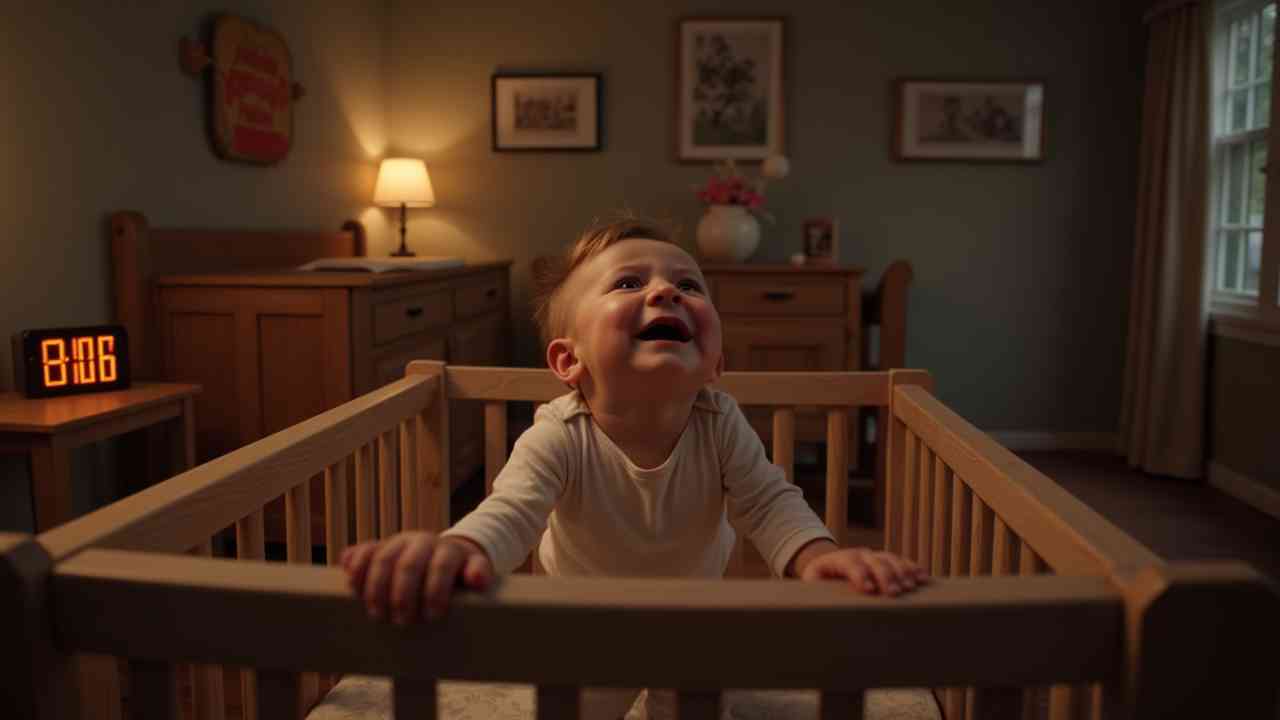
At 9 months, babies are moving. They are learning to crawl, cruise, or pull up to stand. 🤸♀️ This is a huge, exciting change. They spend their awake time practicing this skill. When they wake up, they start practicing. They might pull themselves up in the crib. Then, they get stuck. They do not know how to sit back down. They stand there and cry. This is the biggest cause of night wakes.
2. Separation Anxiety
This is a big one. Around 8 to 10 months, separation anxiety peaks. Your baby realizes that you are a separate person. They realize you can leave the room. 🥺 When they wake up, they panic. They need to see you to feel safe. They might cry very hard when you put them down. This anxiety is a sign of a strong bond. But it is very tough on sleep.
3. Dropping the Third Nap
Many babies at this age are ready to transition. They are moving from three naps to two. This transition is rough. They become overtired. An overtired baby fights sleep and wakes more often. 😩 If you force them to keep the third nap, they cannot sleep at night. If you drop it too soon, they are overtired. This is a very tricky balance. But it is a key cause of the 9-month sleep regression.
📝 What Are the Signs of the 9-Month Sleep Regression?
The signs are very clear. They show a big change from their normal routine. If you see these signs, you are likely in the thick of it. Frequent Night Wakes: Your baby was sleeping through the night. Now, they wake up 3, 4, or 5 times.
Nap Refusal: Your baby fights naps. They might take a short nap. Or, they skip it completely.
Crying at Bedtime: They cry harder when you put them down. They seem to want you to stay.
Standing in the Crib: You put them down. You leave the room. You check the monitor. They are standing up and yelling. 📢
💡 How Do You Fix the 9-Month Sleep Regression? (Survival Tips)
This phase is temporary. You need a strategy to get through it. The key is to support the milestone. But you must not create new bad habits.
1. Practice "Sitting Down" During the Day
This is a key fix for the standing problem. During the day, help them practice. Pull them up to stand. Then, show them how to get back down. Use a cue word like "Down." At night, they get stuck. Go in and gently lay them back down. If they stand up again, leave. They need to learn how to solve the problem themselves. Do not rush to pick them up.
2. Commit to the Two-Nap Schedule
If you have not dropped the third nap, do it now. The third nap is usually around 4:00 PM. Move to a two-nap schedule. This ensures they are tired enough for good nighttime sleep. The two naps should be mid-morning and early afternoon. This creates proper sleep pressure. This helps you beat the 9-month sleep regression.
3. Be Quick and Boring at Night
This is for the separation anxiety. When they wake up and cry, go in quickly. But be boring. Do not turn on the lights. Do not play with them. Do not feed them unless it is a scheduled feeding. Use a phrase like, "Mommy is here, you are safe, time for sleep." 🤫 Give them a quick pat and leave. This reassures them. But it does not reward them for waking up. You are reassuring them that you exist. But you are not rewarding the night wake-up.
4. Re-Commit to Consistency
This is the most important tip. Consistency is your greatest tool. Stick to your routine. Put them to bed at the same time every night. This predictability is calming for your baby. Predictability is key to breaking the 9-month sleep regression. 💖
✅ The Final Verdict: When Will It End?
The 9-month sleep regression is rough. But it will pass. It usually lasts 3 to 6 weeks. After this, your baby will have mastered their new skills. They will be on a solid two-nap schedule. Just stay consistent. Be boring at night. And celebrate those new milestones. You will all be sleeping soundly again soon. You got this. 💯