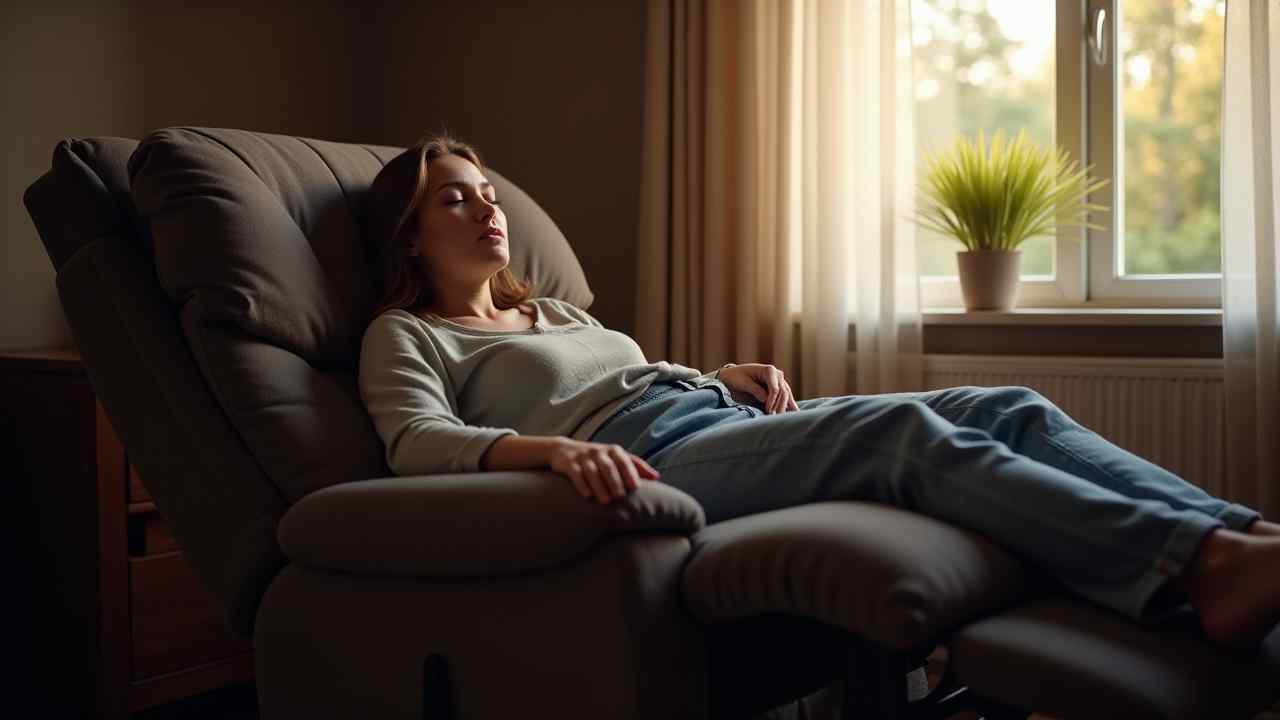
Sleep Recliner: A Guide 😴
What is a Sleep Recliner?
A "sleep recliner" is a special chair. It is a type of armchair. It is designed for one main job: Sleeping. This is not your grandpa's old, puffy recliner. (Although, that could be one!). ( A true "sleep recliner" is different. It is often a piece of medical-grade furniture. Or it is a high-tech "comfort" chair. Its main feature is a deep recline. A normal recliner just "leans back." A sleep recliner can go flat. (Or "near-flat"). ( This is called "infinite position"... ...or "zero-gravity." Or "lay-flat." This means you can use it as a chair. And you can use it as a bed. It is a 2-in-1 solution. It is a lifesaver for many. But it is also a source of great risk. This guide will explain the pros. And the very serious cons. Let's begin.
The "Why": Who Needs a Sleep Recliner?
Why would anyone need to sleep in a chair? The reasons are almost all medical. For 99% of people, a bed is better. But for 1% of people, a bed is impossible. A bed is "flat." A "flat" position is painful. Or it is dangerous. A sleep recliner is a medical tool. It allows for "elevated sleep." This is the key.
1. Post-Surgery Recovery (The #1 Use) 🩹
This is the #1 reason to buy one. You just had major surgery. Shoulder Surgery: (e.g., Rotator Cuff repair). (You cannot lie flat. It is impossible. It puts your shoulder in a painful spot. You must sleep "propped up." A recliner is the only way. Abdominal Surgery: (e.g., Tummy Tuck, C-Section, Hernia). (You cannot lie flat. It will pull on your stitches. It is agony. You must sleep in a "bent" (flexed) position. The recliner is the only way. Back Surgery: Again, a "zero-gravity" recline... ...can take all the pressure off your spine. It is the only way to rest. For these people, the recliner is a lifesaver. It is a short-term (2-6 week) tool. It is essential for recovery.
2. Chronic Medical Conditions 🩺
This is the second reason. These are long-term problems. Sleeping flat is a problem. Acid Reflux (GERD): If you lie flat, acid comes up. It burns your esophagus. It is painful. You must sleep elevated. Gravity is your friend. The recliner keeps the acid down. Sleep Apnea (CPAP): Many people find it easier to wear a CPAP... ...while in an elevated position. It feels more natural. Congestive Heart Failure (CHF): This is a serious heart condition. It causes "orthopnea." This is a medical term. It means "cannot breathe while lying flat." Fluid builds up in the lungs. These patients must sleep in a recliner. It is a medical necessity.
3. The Elderly (Mobility & Safety) 👵
This is the third, huge group. For many seniors, a bed is a "danger zone." A bed is low. Getting out of a low bed... ...requires a lot of strength. (Core, legs, arms). ( Many seniors are too weak. They cannot get out of bed. Or they fall while trying. A fall is a disaster. (A broken hip). ( A recliner is safer. It is a chair. It is high up. It is easier to get out of. And this brings us to the "best" recliner...
The Best Type: The "Lift Chair" Recliner 🚀
This is the "pro-level" sleep recliner. It is the true "medical" chair. It is a power lift chair. What is it? It is a sleep recliner (it goes flat). But it has a third motor. A "lift" motor. You press a button. The entire chair... ...will tilt up and forward. Slowly and safely. It lifts you... ...from a "sitting" position... ...to an almost-"standing" position. You do not use your legs. You do not use your arms. The chair "stands you up." This is a 10/10 lifesaver. It is for:
- Seniors with no leg strength.
- People with severe arthritis.
- Post-op patients (who cannot use their abs).
The "Lifestyle" Use (The Nursery) 👶
There is one other "sleep" use. The nursery glider. A new mom is exhausted. It is 4:00 AM. She is feeding the baby. A deep, plush recliner is a popular choice. She can recline. She can rest. She (and the baby) might fall asleep. (Safety Note: The AAP is against this. It is an "accidental co-sleeping" risk. It is a suffocation risk for the baby. A bed is safer. But, we all know it happens. It is a "survival" tool for new parents). (
The "Big Lie": A Recliner is NOT a Bed. 🚫
This is the most important part of this article. We have covered the "pros." They are real. But the "cons" are deadly. I am not joking. There is a huge difference... ...between "short-term recovery" sleep (good)... ...and "long-term, chronic" sleep (bad). Sleeping in a recliner every night... ...for months or years... ...is extremely dangerous for your body. A bed is flat. A recliner is bent. It puts your body in a "C" shape. (Or a "flexed" position). ( This "C" shape will destroy your body. It causes two massive, severe problems.
DANGER 1: Joint Contractures (The "C" Shape) 😖
This is the musculoskeletal risk. Your body is smart. It adapts to its most common position. If you sit/sleep in a "C" shape... ...for 8 hours (sleep) + 4 hours (TV)... ...your "C" shape is your new "normal." Your body will "freeze" in this position. This is called a contracture. Your muscles and tendons shorten. Hip Flexor Contracture: Your hips are "flexed" (bent) all night. Your hip flexor muscles will shorten. Permanently. Knee Contracture: Your knees are "bent" all night. Your hamstring muscles will shorten. Permanently. The Result: You can no longer stand up straight. Trying to stand... ...pulls on your shortened hip flexors. This pulls on your pelvis. This pulls on your lower back. This is a source of severe, chronic lower back pain. And hip pain. You will be a "hunched-over" person. You have created this problem.
DANGER 2: Blood Clots / DVT (The "Deadly" Risk) 🩸
This is the fatal risk. Please, take this seriously. DVT = Deep Vein Thrombosis. A blood clot. In your leg. How does this happen? Stagnant blood. When you sleep in a recliner... ...your knees are bent. For hours. This "kink" in your leg (at the knee)... ...impedes blood flow. It makes the blood "pool" in your lower legs. This "stagnant" blood is very likely to clot. This is the exact same risk... ...as a 12-hour plane flight! You are not moving. You are in a "chair" position. A clot (a DVT) forms in your calf. You wake up. You stand. The clot breaks free. It travels through your body. It goes to your lungs. It is now a Pulmonary Embolism (PE). This can be instantly fatal. This is not a "small" risk. It is a major, known medical risk... ...of long-term "chair sleeping."
The Verdict: A Bed is ALWAYS Better
If you can sleep in a bed, you must sleep in a bed. A flat bed. It is the only safe, long-term option. It lets your joints extend. It lets your blood flow. A recliner is a short-term tool (for post-op). Or a medical necessity (for CHF, etc). It is NOT a "lifestyle choice." It is a "last resort."
How to Buy a Sleep Recliner (The Features)
You have a medical reason. You must buy one. Here is what to look for.
1. Manual vs. Power (Get Power!) 🔌
Manual Recliner: This has a wooden "lever." You must pull the lever. Then you must "shove" the footrest down. With your legs. This is AWFUL. It is a "jerky" motion. It is terrible for a post-op person. Do not buy this. Power Recliner: ✅ This has a motor. It has buttons. You press a button. The chair moves slowly and smoothly. No jerking. No effort. This is the one you need.
2. The Mechanism (The "Positions")
2-Position Recliner: (Up, or "TV" mode). (This is NOT a sleep recliner. Do not buy. 3-Position Recliner: (Up, TV, and "Nap"). (This is still not flat. Do not buy. "Infinite Position" Recliner: ✅ This is the one. It has two motors. One for your back. One for your feet. They move independently. This means you can get 100% "lay-flat." You can create the "zero-gravity" 'S' shape. This is the most versatile, most comfortable option. "Lift Chair" Recliner: ✅ This is an "infinite" chair... ...with a third motor for the lift. This is the best medical-grade option.
3. The Material (Fabric vs. Leather)
This is a personal choice. But for sleeping, one is better. Leather: Pros: Easy to clean. Looks high-end. Cons: It is bad for sleeping. It is cold in winter. It is hot and sticky in summer. It does not "breathe." You will get sweaty. Fabric (Microfiber/Chenille): ✅ Pros: This is the best for sleep. It is soft. It is warm. It is breathable. It feels "cozy," like a bed. Cons: Harder to clean. (But you will just use a sheet, right?). (
4. The Size (They are HUGE)
Measure your space! And measure your doorway. A"wall-hugger" recliner is great for small rooms. It can recline with only 4-6 inches of wall space. But a "lay-flat" recliner needs a lot of room. It is a "bed" in your living room. Measure first.
5. The "Battery Backup" 🔋
This is a critical safety feature... ...for a power lift chair. What happens if the power goes out? And your 80-year-old father is stuck in the chair? He cannot get out. A "battery backup" is a small battery. It holds enough power... ...to get the chair back to "standing" one time. It is an emergency-exit feature. Do not buy a lift chair without one.
Conclusion: A Tool, Not a Lifestyle
The sleep recliner is a powerful tool. For many, it is a medical miracle. It is the only way to sleep... ...after a shoulder surgery. Or with a serious medical condition. It is a fantastic short-term tool. Or a medical necessity. But it is NOT a healthy long-term lifestyle. If you can sleep in a bed, you must. The Dangers of Long-Term Use: 1. Joint Contractures (Hip/Knee pain, C-shape spine). 2. Blood Clots (DVT/PE). (This is the fatal risk). ( If you MUST buy one: 1. Buy a Power Recliner. (Not a manual "lever"). ( 2. Buy an "Infinite Position" (2-motor) model. (This lets you go 100% flat). ( 3. Buy a Lift Chair if you have mobility issues. (Make sure it has a battery backup!). ( 4. Choose a soft, breathable fabric (not leather). ( This is a serious purchase. Please, be safe. Respect the risks. And talk to your doctor. 🌟