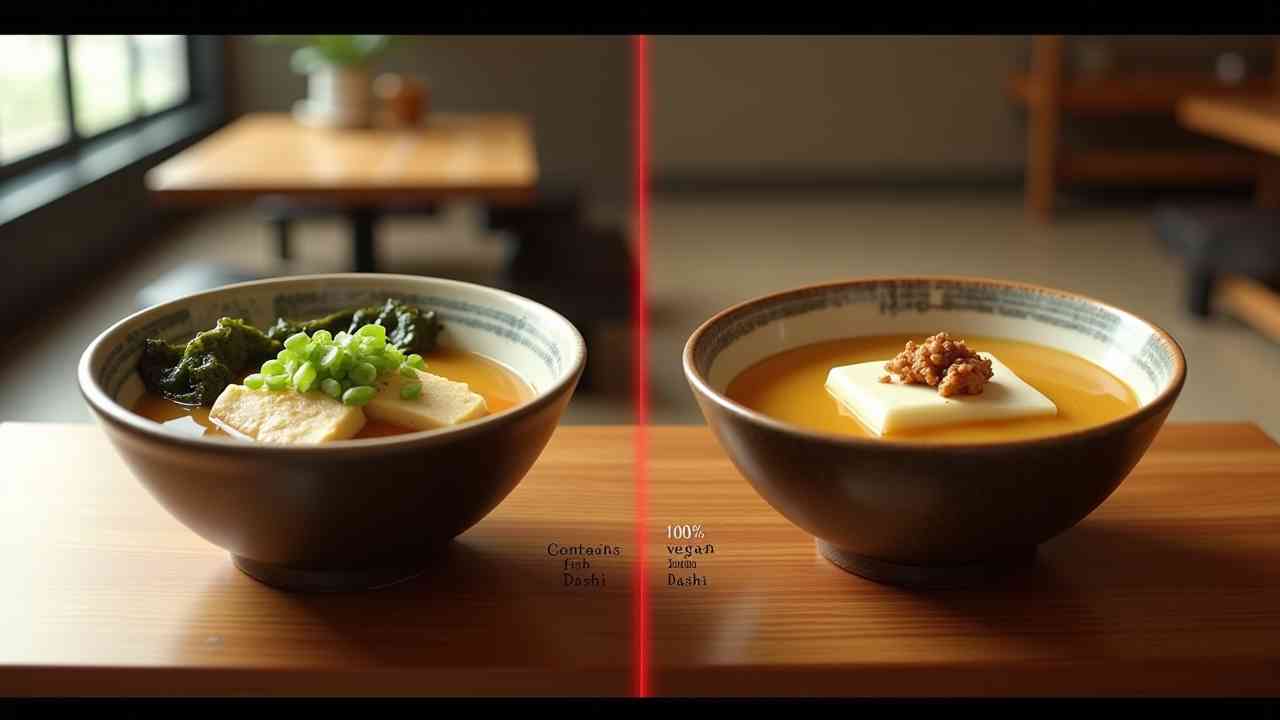
🤔 Is Miso Soup Vegetarian? The Truth About Dashi 🐟
Miso soup is a warm, savory delight. 🍲 It is a staple in Japanese cuisine. Many people assume it is vegetarian. But is miso soup vegetarian? Or is it vegan? The answer is crucial for plant-based eaters. Unfortunately, the answer is usually no. This is a common and surprising trap. Let's find out why this simple soup is not safe.
🥣 What Is Miso Soup Made Of?
To understand the problem, we must look at the parts. Miso soup has three main components. Two of them are perfectly fine for vegetarians. One is a major issue. The first part is the miso paste itself. This is a fermented paste. It is made from soybeans, salt, and koji (a fungus). Miso paste is 100% vegan. It is a fantastic plant-based ingredient. ✨ The second part is the toppings. These are things like silken tofu, wakame seaweed, and green onions. These are all vegan. So far, everything looks safe. The third part is the soup base. This is the liquid. This is the problem. This liquid is called \"dashi.\"
🚫 What Is Dashi (And Why Isn't It Vegetarian)?
Dashi is the traditional Japanese soup stock. It is the flavor foundation of miso soup. Most dashi is not vegetarian. This is the critical fact you need to know. This is the hidden ingredient. It makes the soup savory and deep. But its source is not from plants. This is why the answer to "is miso soup vegetarian" is no.
What Is in Traditional Dashi?
Traditional dashi is made from two things. The first is kombu. This is a type of dried kelp (seaweed). Kombu is perfectly vegan. It provides a lot of umami. The second ingredient is katsuobushi. This is the problem. Katsuobushi is also known as bonito flakes. Bonito is a type of tuna. 🐟 Katsuobushi is dried, fermented, and smoked fish. These fish flakes are steeped in hot water. This creates the dashi stock. Therefore, the soup contains fish. This makes it non-vegetarian and non-vegan.
💡 How Can You Be Sure Your Miso Soup Is Vegetarian?
You are not out of luck. True vegetarian miso soup does exist. It is delicious. But you must be careful. You need to know how to ask. This safe version uses a plant-based dashi. This dashi skips the fish flakes. It relies only on plants for its flavor. It is just as delicious.
What Is Vegetarian Dashi?
Vegetarian dashi is often called kombu dashi. It is made using only kombu (kelp). This gives a simple, clean, savory flavor. It is 100% vegan. 🌿 Sometimes, dried shiitake mushrooms are also used. They are soaked with the kombu. This creates a much richer, smokier flavor. This shiitake-kombu dashi is a deep, flavorful, vegan stock. It is the perfect base for vegetarian miso soup.
🧑🍳 How to Check Miso Soup (At Restaurants or Stores)
You must always be an advocate for your diet. Never assume the miso soup is safe. Here is how you can check.
How Do You Ask at a Restaurant?
When you order, you must be specific. Ask the server, \"Is your miso soup vegetarian?\" Do not just ask if it has meat. Fish is the key. A better question is, \"Does your dashi contain fish?\" You can also ask, \"Is your dashi made with katsuobushi or bonito?\" If they say yes, you cannot eat it. 🚫 Some restaurants (especially vegan or Buddhist-style spots) will use kombu dashi. They will clearly state this. Always ask to be safe.
What About Instant Miso Soup?
This is even trickier. Read the ingredient label. Look for \"bonito,\" \"katsuobushi,\" or \"fish extract.\" These are very common in instant packets. Look for instant miso labeled as \"vegan.\" Or check the ingredients. If it only lists seaweed or mushroom extract, it is safe. Many brands now offer a clearly labeled vegetarian miso soup option.
🧑⚖️ The Final Verdict: Is Miso Soup Vegetarian?
No, traditional miso soup is not vegetarian. It is not vegan. The soup base (dashi) is made with bonito fish flakes. This is a critical fact for all plant-based eaters. However, vegetarian miso soup is easy to find. It is also very easy to make at home. Just use kombu dashi or shiitake dashi. Always ask at restaurants. Always read the label at stores. 💚