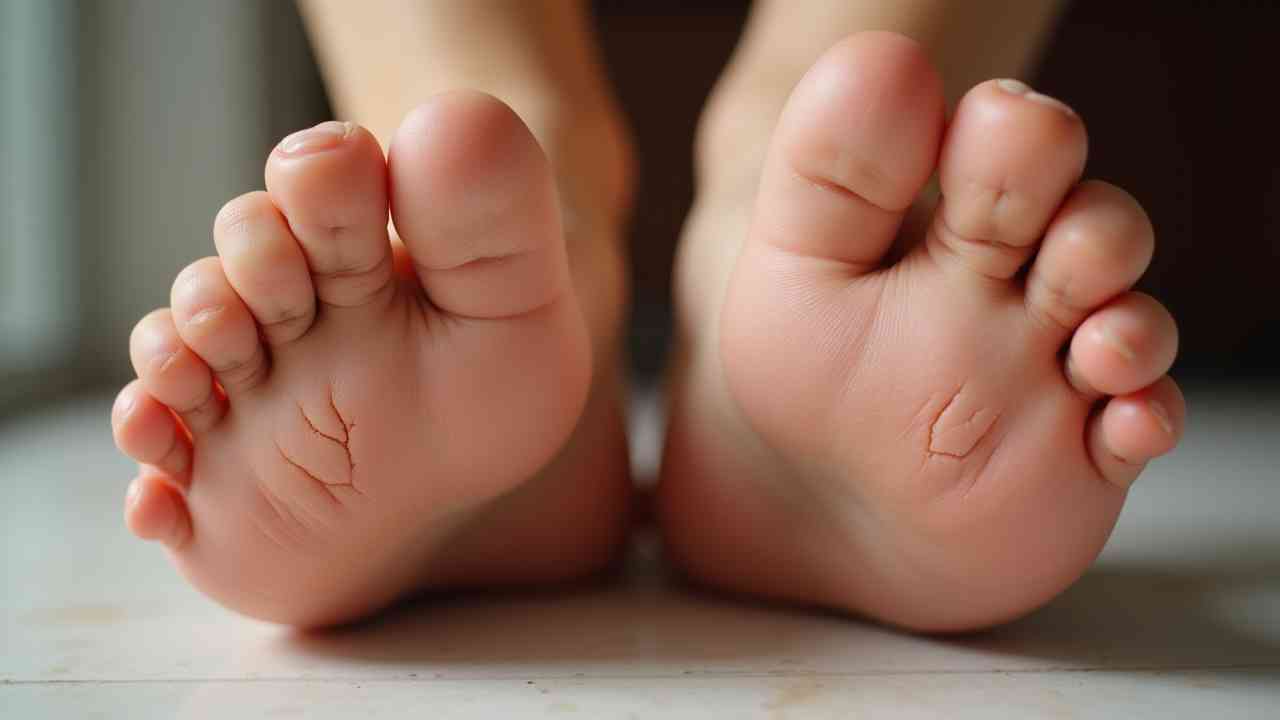
How to Soften Cracked Heels FAST 👣💧
What Are Cracked Heels?
Cracked heels are a very common foot problem. They are also known as heel fissures. 👣 The skin on your heel is thick. It is called a callus. When this skin becomes too dry, it loses elasticity. It splits under pressure. This causes painful cracks. These cracks can be shallow. Or they can be deep. Deep fissures can bleed. They are very painful. They also create a risk of serious infection. 🦠 Softening these heels is a multi-step process. It involves removing dead skin. It also involves deep hydration. This is a guide to fix cracked heels fast.
Why Do Heels Crack? The Main Causes
Understanding the cause is key to prevention. Your heels crack for two main reasons. These reasons are dryness and pressure. ⚖️ When these two factors combine, skin fails.
Cause 1: Excessive Dryness (Xerosis)
Your heel skin has very few oil glands. This makes it naturally dry. It cannot moisturize itself well. Cold winter air makes this worse. ❄️ Indoor heating also strips moisture from the air. This leads to very dry, brittle skin. The skin loses its flexibility. It becomes hard.
Cause 2: Mechanical Pressure
Your heels take all your body weight. 🏋️ Standing or walking puts immense pressure on them. This pressure causes the heel pad to expand sideways. If the skin is dry, it cannot stretch. Instead of stretching, it splits. It cracks open. 😫 This is why the problem is worse in summer. ☀️ People wear open-backed shoes, like sandals or flip-flops. These shoes offer no heel support. 🩴 The fat pad on the heel expands freely. This increases the pressure on the dry skin. The result is deep, painful fissures.
Other Risk Factors
Some factors increase your risk. medical Obesity: This increases the pressure on your heel pad. Aging: Skin naturally becomes thinner and drier with age. Hot Showers: Hot water strips natural oils from your skin. 🚿 Harsh Soaps: Soaps can disrupt your skin's natural pH. This causes dryness. Medical Issues: Some conditions cause cracked heels. These include diabetes, thyroid issues, and eczema. If you have diabetes, foot care is critical. 🩺 A cracked heel can lead to a diabetic foot ulcer. This is a very serious medical emergency. 🚨 Consult your podiatrist immediately.
The 3-Step Plan to Soften Cracked Heels FAST
You can fix your heels at home. This plan takes about 30 minutes. ⏰ You must follow three steps in order. The steps are: Soak. Exfoliate. Occlude. Do this 2-3 times a week. Your heels will transform.
Step 1: The Therapeutic Soak (Softening) 🛁
You cannot scrub dry skin. It is too hard. You must soften the thick callus first. This is the soaking step. It is essential. How to Soak Your Feet: Fill a basin with warm water. Not hot water. Hot water will dry your skin out more. 🚫 You want the water to be comfortable. Like a warm bath. Soak your feet for 15 to 20 minutes. This is the perfect amount of time. The thick, dead skin will absorb the water. It will become white, soft, and pliable. This prepares it for the next step: removal. 🔑
What to Add to Your Foot Soak
You can use plain warm water. It works fine. But adding ingredients can boost the effects. Option 1: Epsom Salts This is the classic, best option. Add \frac{1{2 cup of Epsom salts to your basin. Epsom salt is magnesium sulfate. It is anti-inflammatory. It soothes aching feet. 😌 It also helps to soften the dead skin. Option 2: Listerine and Vinegar This is a popular home remedy. The mix is often 1 part Listerine, 1 part vinegar, and 2 parts water. The antiseptic in Listerine (thymol) may kill foot fungus. 🦠 The acetic acid in vinegar is a mild chemical exfoliant. It helps dissolve the dead skin. It also kills odor. This soak is very effective. But it is very harsh. 🧪 It can be very drying. Use it sparingly. Option 3: Mild Soap A few drops of a gentle, moisturizing soap is fine. Do not use harsh dish soap. Do not use bar soap. Use a gentle body wash, like Dove or Cetaphil.
Step 2: Physical Exfoliation (Removal) 🪨
Your skin is now soft and white. It is ready. You must now gently remove the dead layer. This is the "exfoliation" step. This is the most crucial part. How to Exfoliate Safely: Take one foot out of the water. Gently pat it dry. Leave the skin slightly damp. Now, choose your tool. You have two safe options. Tool 1: The Pumice Stone 🪨 A pumice stone is natural volcanic rock. It is porous and abrasive. It is the gentlest, safest tool for your feet. Rub the stone in a firm, circular motion. Focus on the thickest, whitest parts of the callus. You will see the dead skin roll off. This is good. Do this for 2-3 minutes. Be patient. Do not rush. Tool 2: The Foot File (Microplane) A foot file (like a Microplane) is more aggressive. It looks like a cheese grater. 🧀 It has tiny, sharp metal blades. This tool is very effective. It removes a lot of skin fast. It is also riskier. You must be gentle. Use light, gentle strokes. Move in one direction. Like you are filing a piece of wood. Do not "scrub." The Golden Rule: Be Gentle! You must be careful. Do not overdo it. 🚫 Your goal is to remove the dead, white skin. That is all. You are not trying to remove the entire callus. A callus is a protective layer. You need some of it. If you scrub too hard, you will hit healthy skin. This skin is pink and tender. If you hit it, it will hurt. 🩸 It will also bleed. This opens you up to infection. Stop scrubbing as soon as the white skin is gone. Stop if you feel any pain or sensitivity. A little bit, done often, is the best strategy. 💡 Do this gentle scrub 2-3 times a week. Do not try to fix 6 months of cracks in one night.
The Tool to NEVER Use: Razors 🚫
You may see tools called "callus shavers." They look like a razor blade on a stick. NEVER, EVER USE THESE. ⚠️ They are extremely dangerous. They are not for home use. It is impossible to control the depth. 🔪 You will cut too deep. You will cause severe bleeding. You will create a large, open wound. This wound will almost certainly get infected. This can lead to cellulitis. This is a medical emergency. Throw these tools away. They are not safe. Stick to a pumice stone or a file.
Step 3: Intense Hydration & Occlusion (Sealing) 🔒
This is the final, vital step. You have soaked. You have exfoliated. Your heels are now smooth. But they are also raw and vulnerable. The skin is open to the air. It will lose moisture fast. You must now seal the skin. 💧 You must lock in the moisture from the soak. This is called occlusion. How to Occlude Your Heels: First, rinse your feet. Dry them completely. Make sure they are dry, but still warm from the soak. Now, you must apply a thick, heavy cream. This is not the time for a light, fluffy body lotion. 🧴 Light lotions contain alcohol. They will sting. They will evaporate. You need a heavy-duty barrier cream. You have two choices. Choice 1: A Keratolytic Cream (The Best) This is the advanced, best choice. Look for a foot cream with Urea or Lactic Acid. 🧪 These are "keratolytics." They are amazing ingredients. They do two jobs at once. First, they are humectants. They pull water into the skin. Second, they are exfoliants. They gently dissolve the protein (keratin) that holds dead skin together. A cream with 20-40% Urea is a medical-grade miracle. It will dissolve cracks while you sleep. Good brands include Eucerin, Kerasal, or AmLactin. Apply this cream generously. Massage it into your heels. Choice 2: Petroleum Jelly (The Classic) This is the cheapest, easiest, and most effective sealant. Use basic Petroleum Jelly (like Vaseline). 💎 Vaseline is a 100% occlusive barrier. It is the king of sealants. It is better than any oil. It blocks 99% of water loss. This is unmatched. It is not "moisturizing." It has no water. It is a seal. It traps your body's own moisture. Apply a thick, greasy layer of Vaseline. Apply it all over your heels. 👣 The Final Hack: The Sock Method 🧦 Your feet are now covered in cream or Vaseline. You cannot walk around. You will ruin your floors. You must put on a pair of cotton socks. 🧦 Put them on immediately after applying the cream. This is the "slugging" method for your feet. The socks do two things: 1. They protect your sheets from the grease.