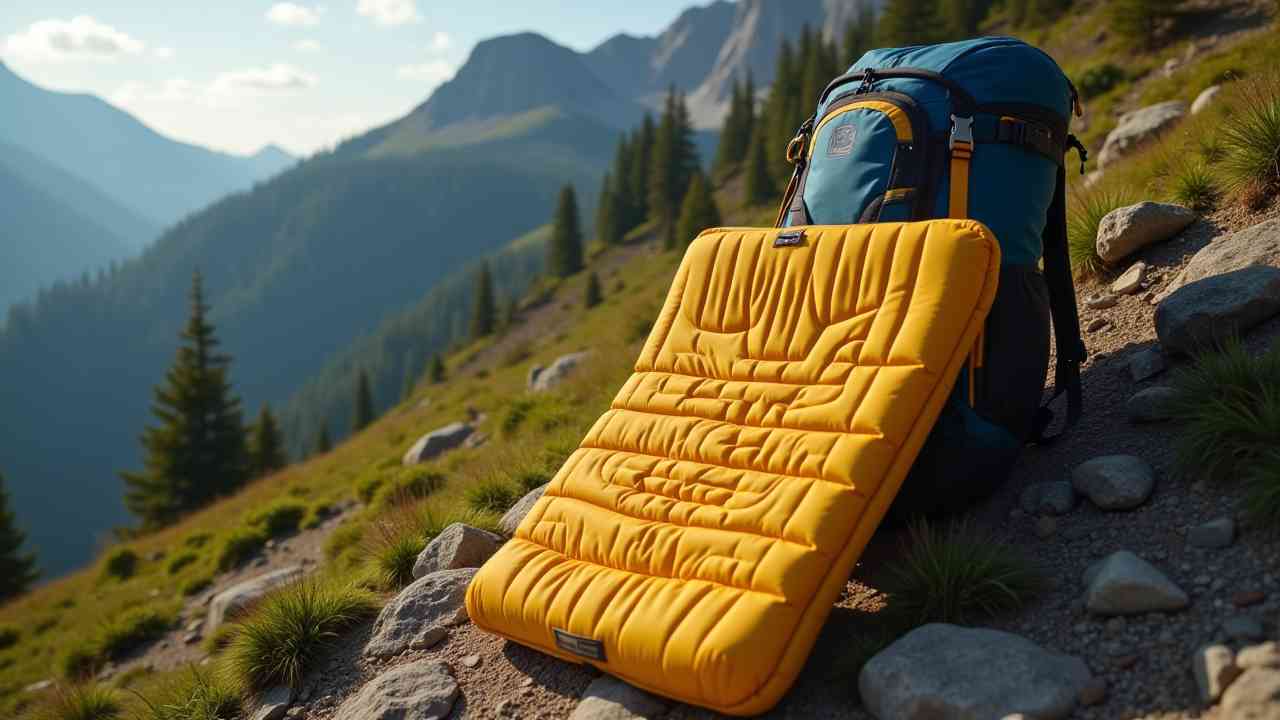
Folding Sleeping Pad: Ultralight & Durable 💤
What is a Folding Sleeping Pad?
A folding sleeping pad is a classic camping mattress. 🏕️ It is loved by many backpackers. Its design is simple and brilliant. Unlike an air pad, it does not inflate. Instead, it folds up like an accordion. Accordion This makes setup and takedown instant. ⏱️ It is a true "grab and go" sleep system. It is also known by its material type. This material is called closed-cell foam. This simple pad is a legend in the outdoors. It has been used for decades by serious hikers. It represents reliability above all else. Let's explore why this "old" tech is still so popular.
The Core Material: Closed-Cell Foam (CCF)
This pad is made from a specific material. It is called Closed-Cell Foam, or CCF. This is the secret to its design. 🔑 The foam is dense. It is filled with tiny, trapped air bubbles. These bubbles are "closed." They cannot leak or escape. This is why the pad cannot deflate. It is a solid object. This material is lightweight. It is also extremely durable. It can be bent, sat on, and abused. It will not break. 💪 It does not absorb water. This is vital in wet weather. A CCF pad will always work. It is 100% reliable. You can poke it with a stick. It will not be damaged. This reliability is its main selling point. This is what separates it from all air pads. Air pads use "open-cell" foam. Or just air. Open-cell foam can absorb water like a sponge. 🧽 CCF foam cannot. It is waterproof by nature. This makes it a superior material for rugged use. The folding design is just a smart way to carry it. Older foam pads had to be rolled. This was bulky. The accordion fold is much neater. It creates a small, flat-ish rectangle. This shape is perfect for strapping to a pack.
The #1 Benefit: Absolute Indestructibility
Why do hikers love this pad? hikers The number one reason is reliability. A folding sleeping pad cannot pop. 🚫 This is its superpower. It is its entire identity. Inflatable air pads are comfortable. They are very popular. But they are fragile. They are balloons. 🎈 They can get a tiny hole. A sharp pine needle can puncture it. A small leak in the night is a disaster. 🥶 You wake up at 3 AM. You are on the cold, hard ground. Your sleep is ruined. Your trip might be, too. This is a huge risk on a long trip. You cannot afford a failure. A slow leak can steal your body heat. This can lead to hypothermia. Finding a tiny hole in the dark is impossible. You need a patch kit. You need glue. It is a mess. The folding foam pad has zero risk. It cannot fail. You do not need a patch kit. You do not need to find a leak. You can throw it on sharp rocks. You can lay it on thorns. It will get dents. It will get dirty. It will still work perfectly. This peace of mind is priceless. 🧘 For thru-hikers, this is vital. Thru-hikers walk for 4-6 months. (e.g., on the Appalachian Trail). Their gear will fail. They need items that last. An air pad might last a few weeks. Or a few months. A foam pad will last the entire 2,000 miles. Guaranteed. This reliability is worth the trade-off in comfort for them.
The Downsides: Comfort and Bulk
This pad is not perfect. It has two major drawbacks. You must accept this trade-off. ⚖️ The trade-off is: Durability for Comfort. You are choosing to be less comfortable. But more safe.
The Comfort Problem (It is Thin)
Let's be honest. This is not a luxury mattress. Most folding pads are thin. They are 0.75 inches thick. A luxury inflatable pad can be 3 or 4 inches thick. ☁️ That is a huge difference in cushioning. On a CCF pad, you will feel the ground. You will feel large rocks or roots underneath you. You must choose your campsite carefully. You must find a flat, smooth spot. 🧹 If you are a side sleeper, this is tough. Your hip and shoulder will press the ground. This can lead to a sore, restless night. 😫 For side sleepers, an air pad is often a better choice. However, many back sleepers are fine. They find it perfectly acceptable. Stomach sleepers also do well on a firm surface. Some pads have an "egg-carton" texture. (Dimples). This texture adds a little softness. It traps a little air. But it is still a firm, minimalist sleep experience. You are not sleeping on a cloud. You are sleeping on a functional tool.
The Bulk Problem (It is Big)
This pad is lightweight. But it is not packable. It does not compress. It just folds. 📦 The final folded shape is a large, bulky rectangle. It is too big to fit inside your backpack. 🎒 This is a rule. You must strap it to the outside of your pack. You will see hikers with a yellow or blue pad. It is on the top of their pack. Or on the bottom. Or on the side. This can be annoying. It can snag on branches. 🌲 It can get wet in the rain (though it will not absorb water). It makes your pack look large and unwieldy. An inflatable pad is the opposite. It packs down to the size of a Nalgene water bottle. 🍼 An inflatable pad fits inside your pack. It is much neater. So, the trade-off is: Bulk vs. Reliability. Do you want a bulky, reliable pad outside your pack? Or a tiny, fragile pad inside your pack? Your answer depends on your trip type.
The Versatility Factor: More Than a Bed
A folding pad is a multi-tool. 🛠️ An air pad has one job. It is a bed. That is all. A foam pad has many jobs. This is a huge advantage. Its solid, foldable structure makes it very useful.
1. The Instant Camp Chair
This is its best secondary use. 🧘 It is the #1 reason thru-hikers love it. You are hiking all day. You stop for lunch. The ground is wet. Or it is rocky. Or it is covered in pine needles. ⛰️ You do not want to sit in the mud. You simply un-clip your pad. You unfold two sections. You now have a clean, dry, padded seat. This is a massive morale booster on a long trail. You can sit in comfort. You can eat your lunch. An air pad cannot do this. You cannot inflate it for a 10-minute break. The foam pad is always ready to be a chair. You can also fold it into a thicker "Z" shape. This makes a very comfortable, supportive camp chair against a log or tree.
2. The Yoga / Workout Mat
At camp, you can do your morning stretches. You can do yoga. You can do core exercises. The pad provides a clean, stable surface. 💪 It keeps you out of the dirt and mud.
3. The Splint (Emergency Use)
In a true emergency, you can be creative. A folded CCF pad is rigid and stiff. It can be used to stabilize a sprained ankle. Or a broken arm. 🩹 It acts as a perfect splint. Just wrap it and tape it. This is a valuable first-aid tool.
4. The Windscreen
Is it too windy to light your camp stove? 🔥 Unfold the pad. Prop it up around your stove. It creates a perfect windscreen. It blocks the wind. Your stove burns hotter. It saves fuel. (Keep it a safe distance from the flame! ⚠️)
5. The Pack Frame
This is an ultralight hiking trick. Some hikers use a "frameless" backpack. This saves weight. A frameless pack is just a floppy nylon sack. To give it structure, they use the pad. They fold the sleeping pad. They slide it into the pack's back panel. The pad's stiffness acts as the pack's internal frame. 💡 This is a brilliant way to make one item do two jobs.
Understanding R-Value (Warmth)
A sleeping pad has a second, vital job. Its first job is comfort. Its second job is insulation. 🔑 You do not just get cold from the air. You get cold from the ground. The ground is a massive "heat sink." It will suck all the heat from your body. This is called conduction. A sleeping pad stops this. It resists heat loss. This resistance is measured by R-Value. R-Value is a standard, scientific number. A higher R-Value is warmer. 🌡️
Folding Pad R-Value
Most folding foam pads have a low R-Value. A typical CCF pad has an R-Value around R-2.0. This R-Value is fine for 3-season camping. It is good for summer. It is okay for mild spring and fall. 🍂 It is NOT good for winter. 🚫 It is not designed for sleeping on snow. You will be very cold. A good inflatable pad can have an R-Value of 4.0 to 7.0. This is a big win for inflatable pads. They are much warmer.
The Reflective Layer Hack
How do brands make foam pads warmer? They add a reflector. This is a brilliant, simple hack. The most famous pad is the Therm-a-Rest Z Lite Sol. ☀️ The "Sol" means it has a silver, reflective surface. This surface reflects your body heat (infrared radiation) back to you. 🔥 This adds extra warmth without adding any weight. This simple reflective layer can boost the R-Value. It goes from R-2.0 to about R-2.6. This 2.6 rating is the gold standard for foam pads. If you buy a folding pad, get the reflective version. Always sleep with the shiny side up! You want it to reflect your heat.
The Pro-Level Hack: The Two-Pad System
So, foam pads are not warm. And they are not comfortable. Inflatable pads are warm and comfy. But they can pop. What is the solution? Use both. 💡 This is the system for winter camping and expeditions. This is the ultimate setup for safety, comfort, and warmth. No serious winter camper uses just one pad.
How it Works:
Step 1: Place the folding foam pad on the tent floor first. The CCF pad is your base layer. It is your insurance policy. 🛡️ Step 2: Place your inflatable air pad on top of the foam pad. Step 3: Sleep on the comfortable inflatable pad.
The Benefits of This System
This system provides three huge benefits. 1. Puncture Protection: The foam pad protects your expensive air pad. It shields it from rocks, ice, and thorns. It makes a pop almost impossible. 2. Massive Warmth (Stacking R-Value): R-Values are additive. They stack! ➕ Your foam pad has an R-Value of 2.6. Your inflatable winter pad has an R-Value of 4.5. Your total R-Value is now 7.1. (2.6 + 4.5 = 7.1). An R-Value of 7.1 is extremely warm. You can sleep on snow. 🌨️ This is how winter mountaineers survive. They stack their pads. 3. Failsafe Reliability: This is the most important part. What if the worst happens? What if your air pad still pops? 💥 You are not sleeping on the snow. You are safe. You still have your R-2.6 foam pad. It is your backup. It will not be a comfortable night. But it will be a safe night. You will not get hypothermia. This two-pad system is the best choice for serious cold.
Who Should Buy a Folding Sleeping Pad?
This pad is not for everyone. 🤷 It is a specialized tool. It is for a specific user. It is for those who value durability over comfort.
1. The Thru-Hiker or Long-Distance Backpacker
This is the #1 user. 🚶 If you are hiking for 6 months, your gear will fail. An air pad is a ticking time bomb. 💣 A foam pad is a 100% guarantee. It cannot break. The thru-hiker is willing to sacrifice comfort. They do it for this total reliability. They also love the "sit pad" feature for daily lunch breaks.
2. The Ultralight Minimalist
The foam pad is a classic ultralight item. An air pad is light. But it also requires a pump (or stuff sack). It requires a patch kit. A foam pad is just the pad. 14 ounces. Done. ✅ Some minimalists even cut their pad. They make it a "torso-length" pad. They let their feet rest on their backpack. This saves even more weight.
3. The Budget or Beginner Camper
A high-end inflatable pad costs 150 to 250. 💸 A classic folding foam pad costs 45 to 55. 💰 This is a massive price difference. For a new camper, a foam pad is a smart first purchase. It is cheap. It is indestructible. You can learn what you like. You can use it forever. Even if you upgrade, it becomes your backup pad.
4. The Winter Camper (As a Second Pad)
As we discussed, this is the perfect pad for winter. But only as the bottom pad. It is essential for insulating and protecting your main air pad.
Conclusion: The Reliable Workhorse
The folding sleeping pad is a legend. 🌟 It is not the most comfortable pad. It is not the smallest pad. But it is the most reliable pad. It will never, ever let you down. It is the "Toyota Camry" of sleeping pads. It just works. 🚗 If you are a thru-hiker, a minimalist, or a winter camper, you need one. If you are a car camper who wants luxury... buy an inflatable pad. ☁️
But for true, rugged reliability... the folding foam pad is king. 👑 It offers instant setup. It offers a warm seat. And it offers the peace of mind that you will never wake up on a cold, flat mattress. 🌟