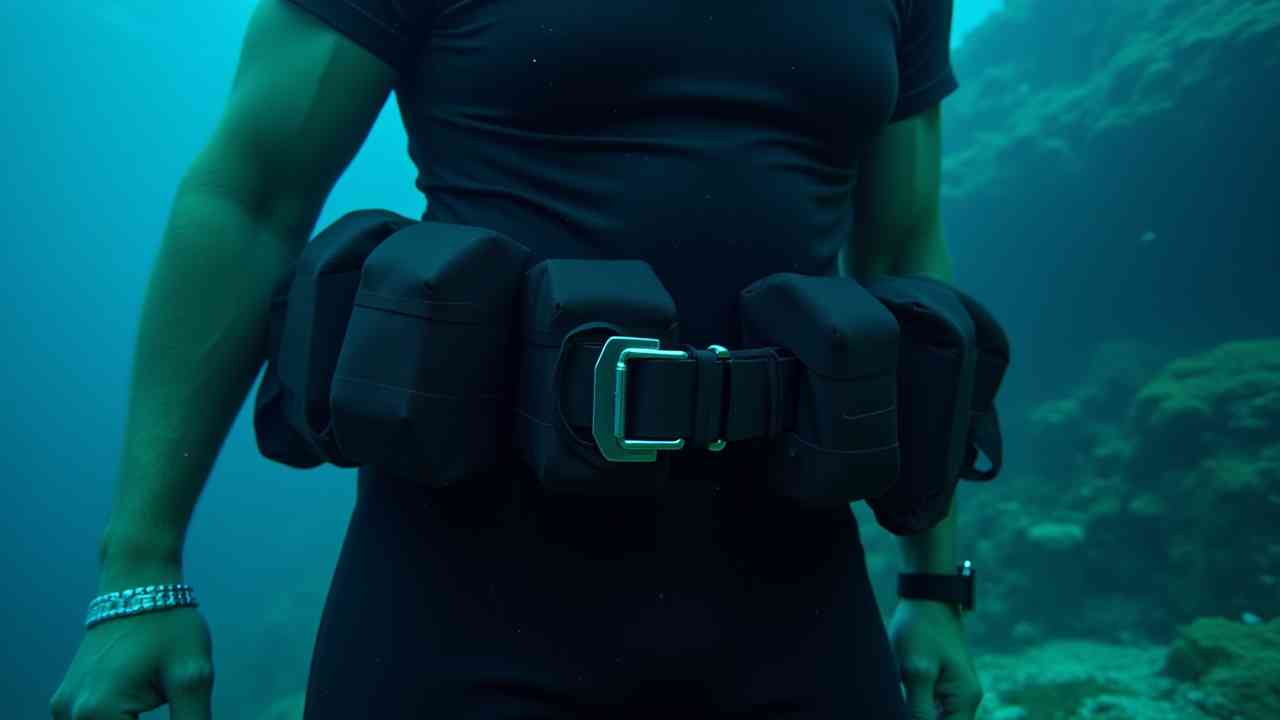
Diving Weight Belt: Safety, Buoyancy, and Types 🌊⚖️
What is a Diving Weight Belt?
A diving weight belt is an essential piece of dive gear 🌊. It is a belt worn around the waist or hips by divers. This includes scuba divers, freedivers, and spearfishers. The belt holds heavy lead weights to control buoyancy.
The Science of Buoyancy Why is it Necessary?
Humans are naturally buoyant, especially in salt water. Our dive equipment, however, is the main problem. Wetsuits are made of neoprene. Neoprene is filled with tiny nitrogen bubbles 🫧. This makes the wetsuit (and the diver) extremely buoyant. You would float to the surface without added weight. A weight belt adds negative buoyancy. This allows the diver to descend safely. The ultimate goal of diving is achieving neutral buoyancy 🔑. Neutral buoyancy means you neither sink nor float. You are perfectly balanced in the water. A weight belt is the first step in achieving this control.
The Critical Safety Feature The Quick-Release
The weight belt is also a crucial safety device 🚨. In an out-of-air emergency, the diver must reach the surface quickly. The belt is designed with a quick-release mechanism. This is its most important feature. This mechanism allows the diver to drop all their lead weights. This is done in one single, fast motion. Dropping the belt makes the diver instantly positively buoyant. They will float rapidly to the surface 🚀. This is why divers practice a "right-hand release." The buckle is always positioned for an easy, fast ditch.
Types of Diving Weight Belts
Weight belts come in several styles. Each style suits a different type of diving or comfort level.
1. Nylon Webbing Belts (Scuba Standard)
This is the most common belt in scuba diving. It is made of durable, non-stretch nylon webbing. Hard lead blocks are threaded directly onto the belt. It is cheap, simple, and extremely strong 💪. The main drawback is slippage. Wetsuits compress at depth due to water pressure. This compression loosens the nylon belt, causing it to slip.
2. Rubber / Marseillaise Belts (Freediving)
Freedivers and spearfishers strongly prefer rubber belts 🐟. The rubber material is very stretchy. It grips the wetsuit tightly. When the wetsuit compresses, the rubber belt contracts with it. It stays securely on the hips, even at extreme depths.
3. Pocket Belts (Comfort)
Pocket belts feature sewn-in pouches. These pouches are sealed with heavy-duty Velcro or zippers. The pockets are filled with lead shot (small, soft pellets) in a mesh bag. This is far more comfortable than hard lead blocks. The soft shot molds to the diver's hips, reducing bruising. However, they can be bulkier than traditional nylon belts.
The Modern Alternative: BCD Integrated Weights
Many modern scuba divers no longer use a belt at all 🚫. They use integrated weight systems. These are built directly into the BCD (Buoyancy Control Device). Weight (usually soft shot bags) is placed into removable pouches. These pouches lock securely into the sides of the BCD jacket.
Advantages of Integrated Weights
This system improves diver comfort significantly. It removes all the weight from the lower back and hips. The weight is distributed more evenly across the torso. This helps the diver maintain better trim (a horizontal position) underwater 🧘. The quick-release system involves pulling specific handles. This ditches the weight pouches in an emergency.
How Much Weight Do I Need?
The amount of weight needed is highly individual. It is not "one size fits all." The correct amount depends on several factors:
- Your Wetsuit: A thick 7mm wetsuit needs much more weight than a 3mm suit.
- Body Composition: Muscle sinks, while fat floats.
- Water Type: You need more weight in salt water 🌊. Salt water is denser and more buoyant than fresh water.
- Tank Material: Aluminum tanks become more buoyant as they empty. Steel tanks do not.
Always perform a buoyancy check with your instructor. This ensures you have the correct, minimal amount of weight. Carrying too much weight is dangerous and inefficient.
Conclusion: An Essential Piece of Safety Gear
The diving weight belt is essential for controlling your descent. It is vital for achieving neutral buoyancy. More importantly, it is your most critical safety device. Always know how your quick-release works. Practice ditching your weights 🌟.