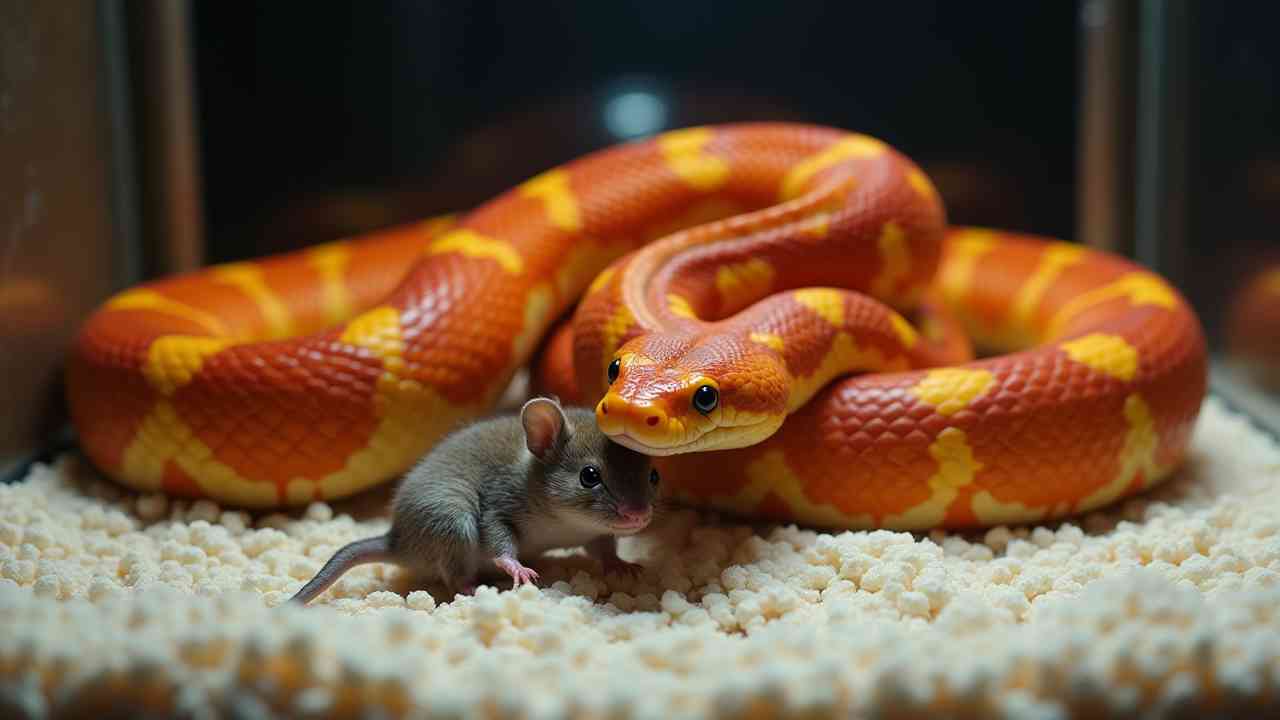
Corn Snake Diet: From Pinkies to Adult Mice 🐍
What is a Corn Snake Diet?
A corn snake's diet is very simple. 🐍 They are obligate carnivores. This means they must eat whole animal prey. They get all their nutrients from that prey. They cannot survive on plants, insects, or fruits. In captivity, their diet is clean and simple. It is almost entirely mice. 🐁 This guide will cover everything. We will explain what to feed your corn snake. We will cover every life stage. From a tiny hatchling to a full-grown adult. Understanding this diet is the #1 key. It is the key to a long, healthy life for your snake.
The Corn Snake Diet in the Wild vs. Captivity
The diet in the wild is very different. It is based on opportunity. It is not as clean. It helps to understand their natural instincts.
In the Wild: A Generalist Hunter
In the wild, corn snakes are generalists. They are a "constrictor." They squeeze their prey. Squeeze Hatchlings start by eating lizards. They also eat small frogs. As they grow, their prey changes. 📈 Adult wild corn snakes eat rodents. This includes mice, voles, and rats. They are famous for eating birds. They will climb trees to raid nests. 둥지 They eat both eggs and baby (nestling) birds. This is where they get their name. 🌽 They were often found in farmers' corn granaries. They were not eating the corn. They were eating the mice that were eating the corn. They are excellent pest control. This is why farmers value them.
In Captivity: The Rodent Standard
In captivity, we do not feed them birds. 🚫 We do not feed them lizards. It is not safe or practical. The pet trade has a perfect food source. That source is the mouse. (Mus musculus). Mice provide complete nutrition. They have the right fat, protein, calcium, and vitamins. A diet of only mice is healthy. It is all your corn snake needs to thrive. It is the gold standard for pet corn snakes. 🥇 This makes feeding your pet very easy. You just need to buy the right mice. You must also buy the right size of mouse.
The #1 Rule: Live vs. Frozen-Thawed Prey 🚫
This is the most important topic. It is about safety. You have two choices. You can feed your snake a live mouse. Or a dead, frozen mouse. We must be very clear. This is not a debate. You should never feed your corn snake live prey. ❌ It is dangerous. It is cruel. It is completely unnecessary. The only safe, ethical choice is frozen-thawed (F/T) prey. All reputable breeders and zoos use F/T. You must, too.
Why Frozen-Thawed is Safer (The Risk of Live)
A live mouse is not a "fun challenge" for your snake. It is a life-or-death battle. And your snake can lose. 😥 A rodent is not helpless. It has sharp teeth. It has claws. It is fighting for its life. It will bite. It will scratch. The Danger of a Bite: A mouse bite is devastating. It can kill your snake. ⚠️ If the mouse bites the snake's face, it can damage an eye. This causes blindness. If it bites the snake's body, it can cause a deep wound. This wound can easily get infected. An infected bite can lead to scale rot or sepsis. Sepsis is a blood infection. It is often fatal. 💔 This risk is 100% avoidable. A dead mouse cannot fight back. Other Benefits of F/T Prey: Parasites: Freezing kills most parasites. Live mice can carry mites, ticks, or internal worms. Freezing sterilizes the food. Convenience: You can store F/T mice for a year. You can buy them in bulk. This is much easier and cheaper. 🛒 Ethics: It is more humane for the mouse. It is also more humane for you. You do not have to watch a live feeding.
How to Prepare Frozen-Thawed Prey
This is a simple, but crucial, process. You must do it correctly. You cannot skip steps. Step 1: Thaw the Mouse. Take one frozen mouse from your freezer. 🥶 Place it in a small, sealed plastic baggie. (Like a Ziploc). Put the baggie in a cup of cold water. Let it sit for 1-2 hours. DO NOT use hot water. Hot water will cook the outside. It leaves the inside frozen. This is bad. It can make the mouse "pop" when the snake squeezes it. 🤢 DO NOT use a microwave. NEVER. 🚫 A microwave will cook the mouse. It creates dangerous hot spots. It will explode. It is a disaster. Just use cold water. Be patient. Step 2: Warm the Mouse. The mouse is now fully thawed. It is cold and wet. A corn snake hunts by heat. It hunts warm-blooded prey. 🔥 It will not eat a cold, dead mouse. It does not see it as "food." You must warm it up. This is the "feeding response" trigger. Dump the cold water. Refill the cup with hot tap water. (Not boiling). Place the baggie with the mouse in the hot water. Let it sit for 5-10 minutes. Step 3: The Head Dip (Pro-Tip). This is a great hack for fussy eaters. Take the mouse out of the baggie. It is now warm and dry. Dip just the head of the mouse... ...into the hot water for 10 seconds. This makes the head much warmer than the body. 🌡️ The snake's heat pits will lock onto this "hot spot." This ensures they strike the head. A head-first strike is the natural way. It makes swallowing much easier. Your mouse is now ready. It is time to feed.
Sizing the Prey: The Most Important Rule 📏
This is the second most important rule. You must feed your snake the correct size of prey. If the mouse is too small... your snake will not grow. It will be underfed and skinny. If the mouse is too big... your snake cannot eat it. Or, it will eat it and throw it back up. This is called regurgitation. 🤮 Regurgitation is very dangerous. It is stressful. It burns the snake's throat with acid. We must avoid this. We do this by choosing the perfect size.
The 1.5x Girth Rule
This is the golden rule of prey size. 🔑 Look at your corn snake. Find the widest part of its body. This is usually the middle of the snake. The mouse you feed it... ...should be no wider than 1.5 times the snake's girth. So, the mouse should be just a little bit wider than the snake. Just a little. It should not be 2x or 3x wider. That is too big. If the mouse is the same width as the snake... it is probably too small. A 1.25x to 1.5x width is the "sweet spot."
What is a "Lump"? (The Visual Cue)
Here is an easier, visual rule. 💡 After the snake eats the mouse... you should see a small, visible lump. This lump should be noticeable. It should not be huge. If you cannot see a lump at all... the mouse was too small. 🚫 You are underfeeding your snake. Move up to the next size. If the lump is very large... and the snake's scales are stretched far apart... the mouse was too big. 🚫 This is a high risk for regurgitation. Move down a size. A small, gentle, visible lump is the goal. ✅ This lump should be fully digested. It should be gone in 24-48 hours.
The Corn Snake Feeding Chart: A Life-Stage Guide
Mice are sold in different sizes. These sizes are based on age. As your snake grows, its prey size must grow too. This chart is a guideline. Always use the 1.5x rule. Your snake's girth is the real guide. Not its age. Snakes grow at different rates.
Hatchling Corn Snake Diet (0-6 Months)
A baby corn snake is called a hatchling. 🐣 It is tiny. It is about 8-12 inches long. The hatchling's diet is Pinky Mice. A "pinky" is a newborn mouse. It has no fur. It is pink. 💗 This is the smallest, most available prey item. A brand new hatchling (a few days old) may need a "day-old" pinky. These are tiny. As the snake grows, you move to "large pinkies."
Juvenile Corn Snake Diet (6-18 Months)
Your snake is now a juvenile. It is growing fast. 📈 It is too big for pinkies. You will see no lump. It is time to move up. The next sizes are: Fuzzy Mice (Fuzzies): A "fuzzy" is a mouse that is 1-2 weeks old. It has a light "fuzz" of fur. It has not opened its eyes yet. This is the next step up from a large pinky. Hopper Mice (Hoppers): A "hopper" is a young mouse. It is 2-3 weeks old. Its eyes are open. It is "hopping" around. This is the size between a fuzzy and a small adult mouse. Your juvenile snake will eat fuzzies. Then it will move to hoppers. This is a key growth phase.
Adult Corn Snake Diet (1.5+ Years)
Your snake is now an adult. It is 3-5 feet long. 🐍 It is done growing in length. It is now growing in girth. It is time for the final prey sizes. Adult Mice (Small, Medium, Large): This is the standard, final diet for most corn snakes. An adult mouse is all they need. 🐁 Most adult corn snakes will eat one large adult mouse. This is their forever diet. Jumbo Mice: A "jumbo" mouse is a very large adult mouse. These are reserved for the biggest corn snakes. (e.g., a 5-foot female). Most males will never need a jumbo mouse.
What About Rats?
Some people feed their snakes rats. 🐀 We do not recommend this for corn snakes. A rat is much higher in fat and protein. It is too rich. This can lead to obesity in a corn snake. Obesity is a serious health problem. It causes a fatty liver. It shortens their lifespan. Also, a "rat pup" (a baby rat) is the right size. But it is very high in fat. It is like "snake junk food." A "pinky rat" is often too big. It is much larger than an adult mouse. Stick to mice. An adult mouse is the perfect, balanced meal. There is no reason to switch to rats. 🚫
How Often to Feed Your Corn Snake (The Schedule)
This is the other common question. A snake's metabolism is very slow. 🐢 They do not eat every day. Or even every week. Overfeeding is a huge problem. It is the main cause of early death in pet snakes. Obesity is deadly. You must follow a strict schedule. 🗓️ This schedule changes with the snake's age.
Hatchling & Juvenile Schedule (Faster Metabolism)
Baby snakes are growing. They are building new muscle. They are building bone. Their metabolism is in high gear. 🔥 They must eat more often. Hatchlings (Pinkies): Feed one pinky mouse every 5 to 7 days. (e.g., Every Friday). Juveniles (Fuzzies/Hoppers): Feed one fuzzy or hopper every 7 to 10 days. (e.g., Every Sunday). This regular feeding fuels their rapid growth.
Adult Schedule (Slower Metabolism)
An adult snake is not growing. It is maintaining. 🧘 Its metabolism is very slow. It is an ambush predator. It is built to wait. Adults (Adult Mice): Feed one adult mouse every 14 to 21 days. (Every 2-3 weeks). That is it. This is the #1 mistake new owners make. They feed their adult snake every week. This is overfeeding. 🚫 Feeding an adult snake weekly will make it obese. It will shorten its life by years. Every 14 days is a perfect schedule. Every 21 days is also fine. Trust their biology. They are not mammals. They do not need a weekly meal.
The Feeding Process: Step-by-Step
You have your warm mouse. You have your hungry snake. Now what? You must make the feeding safe. You must make it stress-free.
1. Prepare the Enclosure
Your snake must feel safe to eat. 🤫 Make the room quiet. Dim the lights. Make sure the enclosure has the right heat. It needs a "hot spot" (88-92°F). A snake must have this heat to digest its food. This is non-negotiable. 🌡️ If the enclosure is too cold, the food will not digest. It will sit in the snake's stomach. It will rot. 🤢 This will cause a fatal infection. Or a forced regurgitation. You must have proper heat to digest food.
2. Use Feeding Tongs
Never feed your snake with your hands. Ever. 🚫 Your hand is warm. It smells like food. The snake will miss the mouse. It will bite you. This is called a "feeding response" bite. It is not aggressive. It is a mistake. But it hurts. And it teaches the snake a bad habit. The snake learns that "hand = food." This makes handling them dangerous. You must use feeding tongs. 🥢 These are long, metal or plastic tweezers. Hold the warm, prepared mouse by its hips. (The "waist"). This presents the mouse head-first.
3. The "Zombie Dance"
Your snake hunts by heat and movement. 🔥 The mouse is warm. But it is not moving. You must make it "dance." This is the final trigger. Wiggle the mouse with the tongs. Make it look "alive." Wiggle it near the snake's favorite hide. Do not poke the snake. Do not scare it. Just wiggle the mouse. The snake's heat vision will see it. The snake will strike. ⚡ The strike is fast. The snake will grab the mouse. It will then wrap the mouse in its coils. This is its "constriction" instinct. It will "squeeze" the dead mouse for a few minutes. Then, it will find the head. It will begin to eat. Once it starts to eat, leave the snake alone. Put the lid back on the tank. Leave the room. 🤫 Do not watch. Do not take photos. Do not handle the snake. You must not handle your snake for 48 hours after a meal. 🚫 This is the digestion period. If you handle them, you stress them out. This can cause a regurgitation. Let them digest in peace. This is the final rule of feeding.
What NOT to Feed Your Corn Snake (The Dangers)
This is a simple list. Stick to mice. Mice are a perfect diet. Do not try to give your snake "variety." They do not need it. They are not human. Variety can be dangerous. Do NOT Feed: 1. Insects (Crickets, Mealworms) 🦗 A corn snake is not an insectivore. It cannot digest insect shells (chitin). Insects have the wrong nutrition. They have no calcium. This is a "junk food." It will lead to weak bones and illness. 2. Fish (Goldfish) 🐠 Some snakes (like Garter snakes) eat fish. Corn snakes do not. Fish contain an enzyme. It is called Thiaminase. This enzyme destroys Vitamin B1 (Thiamine). A fish-based diet will cause a severe neurological disorder. This leads to paralysis and death. Never feed fish. 3. Raw Chicken / Beef (Table Scraps) 🍗 Do not feed your snake "human" meat. It is not a whole animal. It is just muscle. It has no bones. It has no organs. It has no fur. It has no calcium. It has no vitamins. It is a "junk food." A diet of chicken breast will cause severe Metabolic Bone Disease (MBD). The snake's bones will become soft and brittle. It will die a painful death. A snake must eat the whole animal. This is how they get calcium (from the bones). This is how they get vitamins (from the organs). A mouse is a perfect "multivitamin." Stick to mice. Mice only.
The Importance of Water 💧
This is the final piece of the diet. Your snake needs water. All the time. You must provide a large, heavy water bowl. A heavy ceramic bowl is best. It must be heavy. A light plastic bowl will be tipped over. This will soak the enclosure. It must be large. A corn snake needs to soak its whole body. This is how they hydrate. This is how they help their shed. The water must be clean. You must change the water every 2-3 days. Or immediately if they poop in it. (Which they will). 💩 Clean, fresh water is a vital part of your snake's health. Never forget it.
Conclusion: The Simple, Safe Diet
The corn snake diet is easy. It is one of the simplest pet diets. Let's review the rules. 🌟 1. Feed Frozen-Thawed (F/T) Mice. 🐁 Never feed live prey. It is dangerous and cruel. Thaw the mouse in cold water. Warm it in hot water. 2. Get the Right Size. (The 1.5x Rule). 📏 The mouse should be 1.5x as wide as the snake's body. A small, visible lump is the goal. Move up in size as the snake grows. (Pinky \rightarrow Fuzzy \rightarrow Hopper \rightarrow Adult). 3. Get the Right Schedule. 🗓️ Babies (Hatchlings) eat every 5-7 days. Juveniles eat every 7-10 days. Adults eat every 14-21 days. Do not overfeed your adult snake! 4. Use Tongs and Provide Heat. 🥢 Never use your hands. Wiggle the mouse to get a strike. Ensure the enclosure has a hot spot. Heat is required for digestion. 5. Provide Clean Water. 💧 A large, heavy bowl is a must. Keep it clean. That is it. That is the entire plan. This simple, consistent diet is the secret. It is the key to a long, healthy life. Your corn snake can live for 20+ years. Feed them well. 🌟