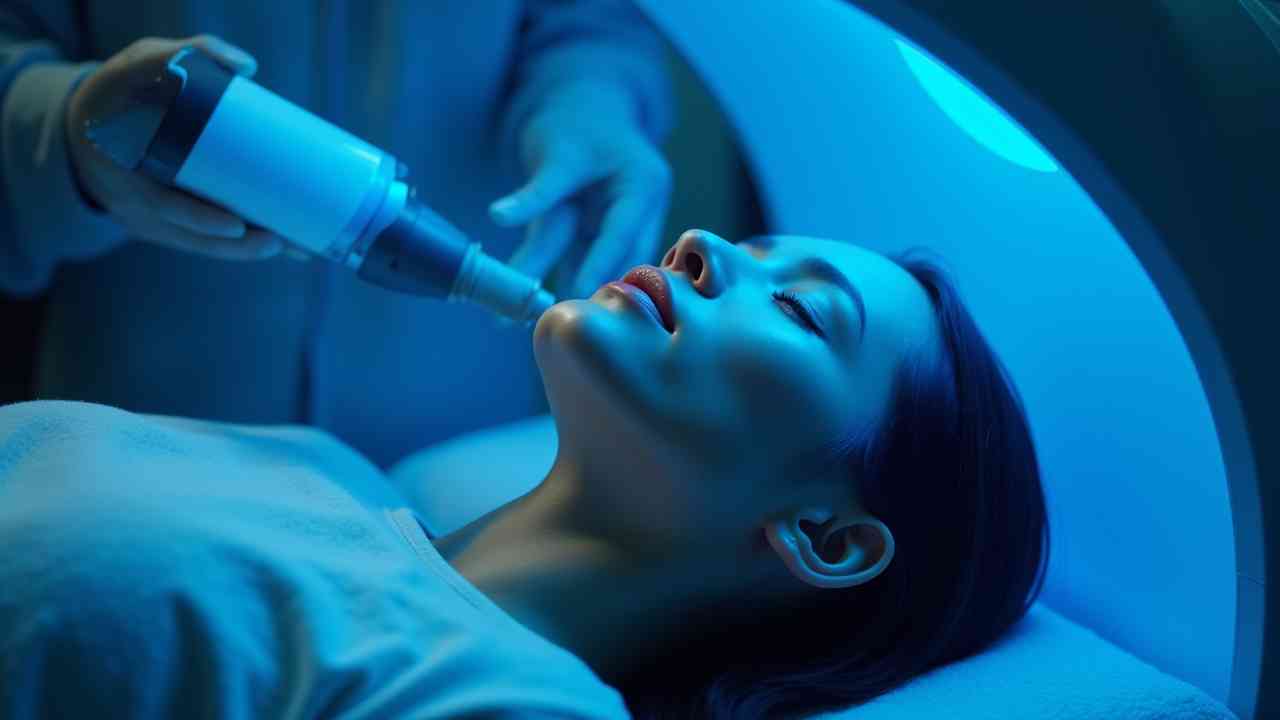
Blue Light Treatment for Skin Cancer: Photodynamic Therapy (PDT) 💡🩺
What is Blue Light Treatment for Skin Cancer?
The blue light treatment used for certain types of skin cancer is clinically known as Photodynamic Therapy (PDT) 🔬.
PDT is a non-invasive, two-step medical procedure. It is used primarily to treat precancerous lesions (Actinic Keratosis) and some superficial, non-melanoma skin cancers (Basal Cell Carcinoma or BCC). PDT is a unique treatment because it destroys abnormal cells selectively. It leaves the surrounding healthy tissue largely undamaged 🔑.
The Two-Step Mechanism of PDT
The entire treatment relies on a chemical reaction. The two necessary steps involve a topical drug and the light source.
1. Sensitizer Application: A photosensitizing agent (usually Aminolevulinic Acid (ALA), branded as Levulan) is applied to the skin. The abnormal, rapidly dividing cancerous cells absorb this drug more readily than normal cells. The drug converts into a light-sensitive chemical within these target cells.
2. Blue Light Activation: After an incubation period (usually 1–3 hours), the area is exposed to a specific wavelength of blue light 💡. This light activates the chemical within the cancerous cells. This process creates singlet oxygen, a form of oxygen that is toxic to the cell. This toxic oxygen selectively destroys the malignant cells 💥.
Conditions Treated by Blue Light PDT
PDT is a targeted therapy. It is not suitable for all forms of skin cancer. Its best use is for superficial, widespread conditions on the skin's surface.
Actinic Keratosis AK
PDT is most commonly and effectively used to treat Actinic Keratosis (AK). AKs are rough, scaly patches of skin that are considered precancerous. They often occur on sun-damaged areas like the face, scalp, and arms ☀️. Treating widespread AKs with PDT is often preferred over surgery or cryotherapy (freezing).
Superficial Basal Cell Carcinoma BCC
PDT can also treat superficial Basal Cell Carcinoma (BCC). BCC is the most common form of skin cancer. However, PDT is not typically used for nodular (deeper) BCC or squamous cell carcinoma (SCC). Deeper lesions require a more aggressive treatment like Mohs surgery to ensure complete removal.
The Patient Experience and Recovery Time
The treatment is performed entirely in a dermatologist's office. Patients must follow strict precautions both before and after the procedure for successful healing.
During the Procedure
Patients often experience a stinging or burning sensation during the blue light exposure. The sensation indicates that the photosensitizing drug is actively working. Cooling devices or airflow fans are often used to manage patient discomfort. The light exposure typically lasts for 10 to 20 minutes ⏱️.
Post-Treatment Recovery
Recovery is characterized by significant, temporary side effects. The treated skin will become red, swollen, and crusty for several days. The treated area must be kept absolutely protected from sunlight for at least 48 hours following the application of the photosensitizer ⚠️. Even indirect sunlight can reactivate the drug and cause a severe burn. Full healing usually occurs within 7 to 10 days.
Conclusion: A Non-Invasive, Targeted Option
Blue Light Therapy (PDT) is an excellent, non-invasive treatment option for superficial skin cancers like Actinic Keratosis. It uses a light-activated drug to selectively destroy cancerous cells with minimal scarring. Always consult a board-certified dermatologist to determine if PDT is the right treatment for your condition 🌟.