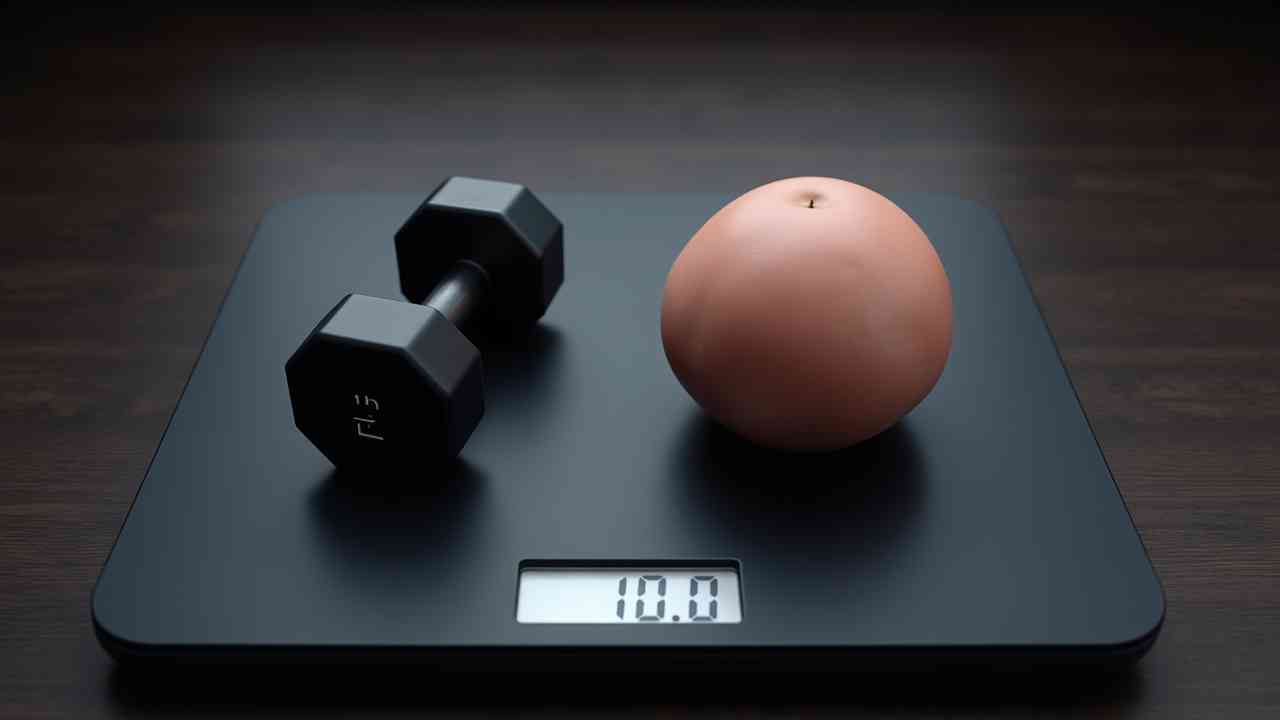
1 Pound Weight: The Full Guide ⚖️
What is a "1 Pound Weight"?
This is a common term. It means two different things. 1. A physical object. A 1lb weight (a dumbbell). 2. A unit of measurement. A 1lb of body mass (fat or muscle). This guide will cover both. They are both important for health.
Part 1: The 1lb Dumbbell 🏋️
This is a piece of fitness equipment. It is often the lightest dumbbell in the gym. It is often coated in colorful neoprene or plastic. (Pink, purple, etc.). ( This is a tool for a specific job. But it has a big myth around it. Let's find out what it is for.
What is a 1lb Dumbbell NOT for?
Let's bust this myth first. A 1lb dumbbell is NOT for building muscle. It will not make you "toned." Your muscles are strong. Your bicep can lift your phone all day. Your phone weighs about 0.5 lbs. A 1lb weight is not a "challenge." It does not create progressive overload. Progressive overload is the only way to build muscle. You must lift heavy, challenging weights. A 1lb weight is too light. It will not make your biceps or triceps grow.
So, What IS a 1lb Dumbbell For?
This light weight has two main, correct uses. Both are important.
Use 1: Physical Therapy & Rehabilitation 🩹
This is the #1 medical use. Imagine you just had shoulder surgery. (e.g., a rotator cuff repair). ( Your shoulder is very weak. It is fragile. Your physical therapist will not hand you a 20lb weight. You will get injured. You must start with zero weight. Just moving your arm is the exercise. The next step is a 1 lb weight. This tiny load is a huge challenge... ...for a weak, recovering joint. It is used for:
- Rotator cuff exercises.
- Wrist and forearm rehab.
- Gentle, post-injury movements.
Use 2: Cardio & Aerobics (The "Tingle" Factor) 🧘
This is the "aerobics class" use. The "cardio-kickboxing" class. You hold the 1lb weights... ...while you do jumping jacks. Or you punch the air. The Theory: The light weight will "tone" your arms. It will burn extra calories. The Truth: This is mostly a myth. It is very ineffective. A 1 lb weight is too light to build muscle. Your arms will not get "toned." ("Toning" just means "building muscle"). ( It also does not burn many extra calories. It is a tiny, tiny load. It is mostly a "placebo" effect. It makes you feel like you are working harder. The Danger: It can actually be dangerous! Why? When you "punch" or move fast... ...with a weight in your hand... ...you are putting ballistic stress on your small joints. This can lead to elbow tendonitis. And shoulder impingement. You are risking injury... ...for almost zero benefit. It is a bad trade. A Better Way: If you want to "tone" your arms... ...stop the 1lb cardio. Go do real, heavy weight training. (Bicep curls, push-ups). ( If you want to burn calories... ...just do the cardio faster. Drop the 1lb weights. And move your arms harder.
Part 2: 1 Pound of Body Weight ⚖️
This is the second meaning. It is a unit of mass. It is the number you see on the scale. "I lost 1 pound!" Or "I gained 1 pound." This is a crucial concept in nutrition. But 1 pound is not just 1 pound. A pound of what? A pound of fat? Or a pound of muscle? They are very, very different.
What is 1 Pound of FAT? (The 3,500 Calorie Rule) 🔥
This is the classic diet rule. You have heard this number. 1 Pound of Body Fat = 3,500 Calories. This is a scientific estimate. It is the "energy value" of 1 lb of fat. What does this mean for weight loss? It means to lose 1 pound of fat... ...you must create a 3,500 calorie deficit. A "deficit" means you burn more calories... ...than you eat. This is the "Law of Thermodynamics." It is the "Calories In, Calories Out" rule. (CICO). ( How to create this deficit: The safe way is to go slow. Do not starve yourself. A 500-calorie deficit per day is the gold standard. (500 calorie deficit) x (7 days a week) = 3,500 calories. The result: You will lose 1 pound of fat per week. This is the safest, most sustainable rate of weight loss. You can create this 500-cal deficit. You can do it with two tools. 1. Diet: Eat 250 calories less than you normally do. (e.g., skip the soda and the chips). ( 2. Exercise: Burn 250 calories more than you normally do. (e.g., a 30-minute walk). ( (Eat 250 less) + (Burn 250 more) = 500 calorie deficit. This is the perfect, healthy plan.
What is 1 Pound of MUSCLE? (The "Good" Weight) 💪
This is the other 1 pound. This is the one we want to gain. Muscle is "good" weight. It is "active" tissue. Muscle is your metabolic engine. 🔥 1 pound of muscle burns calories 24/7. Just to exist. The more muscle you have, the faster your metabolism is. T This is why gaining muscle is the real "secret" to fat loss. The "Volume" Myth (Fat vs. Muscle): You have heard the myth. "Muscle weighs more than fat." This is FALSE. A pound is a pound. A pound of muscle weighs 1 pound. A pound of fat weighs 1 pound. The real difference is volume (size). Muscle is dense. It is sleek. It is compact. It is like a 1lb brick. Fat is fluffy. It is bulky. It takes up a lot of space. It is like a 1lb "lump of Jell-O." This is why you can lose "inches"... ...but not lose "pounds." You lost 1 pound of fat. (Big, fluffy). ( You gained 1 pound of muscle. (Small, dense). ( The scale did not change! But your body is smaller. Your clothes are looser. You look "toned." This is called "re-composition." It is a huge victory! Do not trust the scale. Trust the mirror.
How to GAIN 1 Pound of Muscle
This is hard. It is much harder than losing 1 pound of fat. Gaining muscle is a slow, hard, biological process. A new lifter (in their first year)... ...can only gain about 1-2 pounds of real muscle per month. Max. It requires two main signals. You must do both. 1. You Must LIFT HEAVY WEIGHTS. 🏋️ You must damage the muscle. (This is "Progressive Overload"). ( This is the "signal" for repair. The muscle must be forced to grow. 2. You Must EAT A LOT OF PROTEIN. 🥩 Protein is the "building block." It is the "brick" to build the new muscle. You must also be in a calorie surplus. (Eating more calories than you burn). ( You cannot build a new house... ...without extra bricks. You cannot build new muscle... ...without extra calories.
Part 3: 1 Pound Fractional Plates ⚖️
This is the final meaning. It brings the two ideas together. This is a tool for serious weightlifters. It is a "micro-plate." It is a tiny, 1-pound weight plate. (Or 0.5 lb, or 0.25 lb). ( What is this for? It is for Progressive Overload. Imagine you are a woman. Your overhead press is stuck at 60 lbs. The next jump is 65 lbs. (A 2.5 lb plate on each side). ( That is a huge jump for a small muscle. You cannot do it. You are stuck. The Solution: You use 1 lb fractional plates. You add a 1 lb plate to each side. Your new weight is 62 lbs. Y You can lift that! You just got stronger. You just broke your plateau. Next week, you will try 62.5 lbs. T These tiny 1 pound weights are the key. They are the secret to long-term, slow, safe progress.
Conclusion: A Pound is a Powerful Thing
The 1 pound weight is a simple concept. But it has many meanings. The 1lb Dumbbell... ...is a tool for rehabilitation. It is for healing. It is not for building muscle. The 1lb of Body Fat... ...is 3,500 calories. It is the "energy" you must burn to lose weight. Lose it slowly. (-500 cal/day). ( The 1lb of Muscle... ...is the "good weight." It is your metabolic engine. Build it with protein and heavy lifting. The 1lb Plate... ...is the "micro-plate." It is the secret to breaking plateaus. A "1 pound weight" is a small unit. But it is the most important unit... ...in your entire fitness journey. Treat it with respect.